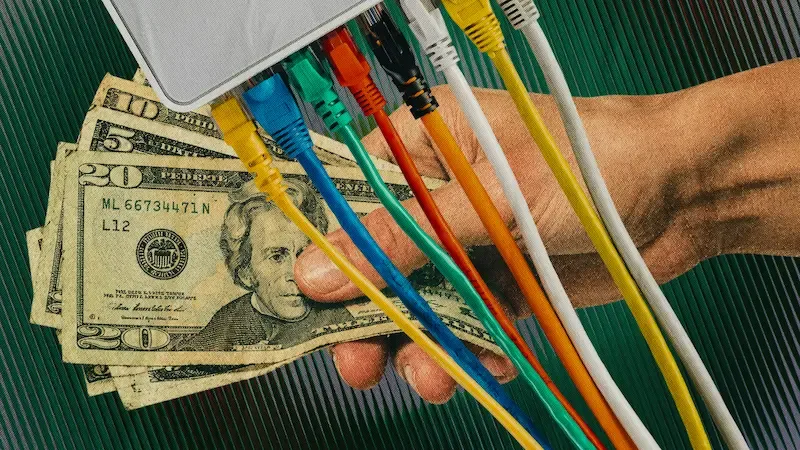



Customers increasingly expect to pay with cards, but most payment processors weren't designed for job site work. Choosing the wrong solution means lost revenue, excessive fees, or cash that arrives too late to cover Friday's expenses. Payments processed late Friday may not clear until Tuesday or Wednesday due to weekend banking closures, which is fine until you realize payroll runs Thursday.
The decision involves more than picking a card reader. Processing fees range from 2.2% to 3.5% per transaction, and settlement timing directly affects your cash flow. How you connect payments to your accounting software matters too: get it right, and accepting cards eliminates busywork; get it wrong, and it creates more. This guide covers evaluation criteria and setup choices that fit your business.
Should you accept credit cards as a contractor?
For most contractors, yes. Your customers increasingly expect a card option, and offering one wins jobs a cash-or-check-only business loses. Cards are now how Americans pay most often: in 2024, credit cards made up 35% of consumer payments by number and debit cards another 30%, while cash fell to 14%, according to the Federal Reserve's 2024 Diary of Consumer Payment Choice. Accepting cards gets you paid faster on completed work and cuts trips to the bank—as long as you pick a processor built for job-site conditions and price it against your monthly volume. The rest of this guide covers how to do exactly that.
Mobile card reader options for job site payments
Accepting payments at remote job sites means dealing with unreliable connectivity, hardware that can't survive a truck bed, and processors built for retail checkout lines rather than project-based billing.
The retail-focused solutions assume you're indoors with reliable WiFi, which describes exactly zero job sites. The right mobile reader needs to work in low-signal areas, withstand job site conditions, and sync with your existing workflows.
Processor | Hardware cost | Transaction fee | Best for |
|---|---|---|---|
Square | Free–$299 | 2.6% + 15¢ | Flexibility, offline capability |
QuickBooks GoPayment | $49 | 2.4% | QuickBooks Online users |
SumUp Solo | ~$99 | 2.6% + 10¢ | Seasonal contractors |
PayPal Zettle | $29 | 2.29% + 9¢ | Budget entry, PayPal customers |
Square
Square offers the most versatile platform for contractors who want flexibility without monthly commitments. Hardware ranges from a free magstripe reader to a $299 standalone Terminal with built-in receipt printer and all-day battery. The Terminal operates offline and syncs transactions when connectivity returns, which means you're not standing awkwardly in a customer's driveway waiting for signal.
Best for: Contractors needing offline capability and hardware flexibility
Hardware: Free magstripe reader to $299 Terminal
Standout feature: Offline mode with automatic sync
QuickBooks Online GoPayment
QuickBooks Online GoPayment makes sense for contractors already using QuickBooks Online for accounting. The $49 card reader accepts chip, swipe, and contactless payments via Bluetooth. Payments instantly appear in customer accounts and project records without manual data entry, eliminating the reconciliation work that otherwise eats into your Sunday evenings.
Best for: QuickBooks Online users
Hardware: $49 Bluetooth card reader
Standout feature: Automatic sync with QuickBooks accounts and project records
SumUp Air
SumUp's Air reader has been retired from its US lineup; the current entry option is the SumUp Solo (about $99). It offers a different value proposition for contractors who don't process payments year-round. Rather than paying monthly fees during slow seasons (when you'd rather forget the business exists for a few weeks), you only pay when you actually run a transaction. No contracts, no setup costs, and the reader itself is affordable enough to keep in your truck as a backup even if you primarily use another system.
Best for: Seasonal contractors with variable transaction volume
Hardware: SumUp Solo, about $99, with no monthly fees
Standout feature: Pay-per-transaction model with no contracts
PayPal Here
PayPal Here has been discontinued and replaced by PayPal Zettle (now branded PayPal Point of Sale). Zettle provides an affordable entry at $29 for the card reader. The platform works well for contractors whose customers already have PayPal accounts, though it offers less robust connection with construction-specific software.
Best for: Budget-conscious contractors with PayPal-using customers
Hardware: PayPal Zettle card reader, $29
Standout feature: Lowest entry cost and PayPal ecosystem integration
Understanding processing fees and pricing models
Consider a plumbing contractor who processes $25,000 in card payments monthly. On flat-rate pricing at 2.6%, that's $650 in fees. On interchange-plus at roughly 2.2% total, that's $550. The $100 monthly difference adds up to $1,200 annually: enough to cover a new tool purchase or absorb a slow week. Not exactly retirement money, but not nothing either.
Flat-rate pricing
Calculating variable fees every month creates headaches for contractors who just want predictable costs. Flat-rate pricing charges the same percentage regardless of card type. Square's 2.6% + 15¢ and PayPal's 2.29% + 9¢ are predictable but typically cost more than alternatives at higher volumes. The simplicity appeals to contractors who want one less thing to think about, which, let's be honest, includes most of us.
Interchange-plus pricing
Flat-rate processors charge the same fee whether a customer uses a basic debit card or a premium rewards card, even though the actual network costs differ significantly. You're essentially subsidizing someone else's airline miles. Interchange-plus pricing passes through the actual card network fees plus a small markup.
Providers like Helcim charge interchange (averaging 1.8%) plus 0.40% + 8¢ per transaction. This transparency means your costs vary based on the actual cards customers use, but the total typically comes out lower.
For contractors processing under $15,000 monthly, flat-rate pricing's simplicity often outweighs the cost difference. For contractors processing $30,000 monthly, interchange-plus models save $90-$120 per month, or roughly $1,080-$1,440 annually compared to flat-rate processors.
Card-present vs. keyed-in transactions
Typing card numbers manually instead of swiping or dipping costs you more on every transaction. Keyed-in transactions cost substantially more across all processors. Square charges 3.5% + 15¢ for keyed entries versus 2.6% + 15¢ for card-present transactions. That 0.9% difference on a $3,000 job is $27 you didn't have to lose. Using a chip reader also protects you from counterfeit-card fraud: Visa reported an 87% drop in counterfeit fraud at chip-enabled merchants between 2015 and 2019, and accepting a chip transaction keeps liability for counterfeit fraud with the card issuer rather than shifting it to you.
For contractors who regularly collect phone payments or take cards without physical presence, some processors offer virtual terminal rates between in-person and fully-keyed pricing. Asking about these intermediate rate tiers can reduce costs significantly for businesses with mixed payment collection methods.
How payment timing affects your cash flow
Credit card payments feel instant to customers, but money typically takes one to two business days to reach your bank account with major processors like Square and Stripe. PayPal usually takes one to three business days. This gap between collecting payment and accessing cash creates real problems when you need to buy materials for the next job. Your customer thinks they paid you; your bank account disagrees.
Weekend and holiday delays
Weekend and holiday processing extends these timelines significantly. Square payments accepted before 5 PM PT Monday through Friday arrive by the next business day. However, a payment accepted Friday evening won't settle until Tuesday or Wednesday: that's a four to five day gap.
Plan a Monday material run based on Friday's payment, and you might find yourself explaining to the supply house why your card declined.
Payment timing | Settlement day | Days to access |
|---|---|---|
Monday–Thursday (before cutoff) | Next business day | 1 day |
Friday (before cutoff) | Monday | 3 days |
Friday evening–Sunday | Tuesday or Wednesday | 4-5 days |
Instant deposit fees
Many major processors offer instant or expedited deposits for an extra fee, often around 1%–1.5% of the transaction value. On a $5,000 payment, instant access costs $75-$87.50. Routine use adds thousands in annual costs, making it an expensive habit rather than a sustainable solution. It's the financial equivalent of paying for overnight shipping on something you could have ordered three days earlier.
Pro tip: Collect payments Monday through Wednesday for fastest access to cash. Schedule final walkthroughs early in the week and reserve Thursday and Friday for starting new projects.
Building cash reserves
The practical solution involves building cash reserves equal to two to three weeks of operating expenses to bridge payment processing delays. Relay's multiple checking accounts make this easier by letting you organize reserves by purpose: one account for operating expenses, another for taxes, another for payroll.
This workflow alignment keeps cash arriving when you need it rather than sitting in processing limbo over weekends.
Connecting payments to your invoicing system
Manual data entry creates errors and wastes time that could go toward billable work. Connected payment solutions automatically record payments in your accounting system, eliminating double-entry and the end-of-month scramble to match deposits with invoices. Nothing says "productive Friday night" like reconciling mystery deposits from three weeks ago.
Accounting software connections
Payments collected through third-party processors often sit as unmatched deposits in your accounting software, requiring manual reconciliation to connect them to the right invoices.
QuickBooks Online Payments offers the tightest connection for QuickBooks Online users, with payments syncing instantly to customer accounts and project records. Transaction fees are 2.9% per card transaction, slightly higher than some third-party processors, but time savings from automatic reconciliation often exceed the cost difference.
FreshBooks connects natively with Stripe for invoice-based payments. Invoices include embedded "Pay Now" buttons, and payments automatically record in your accounting records without additional tools. Customers click, pay, and you never have to chase them down.
Field service platforms
Generic payment processors don't understand contractor workflows: they can't link payments to specific jobs, store cards for recurring maintenance contracts, or handle deposits on multi-phase projects. They were built for coffee shops, not $15,000 bathroom renovations. Field service management platforms like Jobber and Housecall Pro offer their own payment solutions designed for contractor workflows.
Jobber Payments supports card-on-file storage for recurring contracts, deposit collection, and offline payment mode
Housecall Pro's native Stripe connection processes mobile payments with automatic job and invoice linking
Choosing the right connection
Trying to connect payment tools that weren't designed to work together creates workarounds, manual data entry, and reconciliation headaches. It's the software equivalent of forcing mismatched puzzle pieces together. For most contractors, native connections within existing platforms deliver the smoothest workflows with automatic transaction syncing and real-time reconciliation. The key is choosing tools that already talk to each other rather than trying to bridge disconnected systems.
Bottom line: Manual reconciliation typically takes 30-60 minutes per week. Over a year, automatic payment syncing recovers 25-50 hours you could spend on billable work.
The time savings compound quickly. The slight premium some connected processors charge often pays for itself in recovered time that goes toward billable work or business development.
Buying vs leasing payment equipment
Committing to payment equipment feels risky when you're not sure how much you'll actually use it or whether a particular system fits your workflow. Most contractors hesitate between the upfront cost of purchasing and the flexibility of leasing. The right choice depends on how consistently you'll use the equipment and how tight your current cash position is.
Payment equipment costs range from free magstripe readers to $1,649 for full POS systems, with most contractors finding suitable options in the $29-$299 range. Unless you're running a restaurant out of your van, you probably don't need the high-end setup.
Equipment decision guide
Option | Best for | Watch out for |
|---|---|---|
Purchasing | Regular use, 70%+ utilization | Higher upfront cost |
Leasing | Tight cash flow, irregular use | Total cost exceeds purchase price |
Rent-to-own | Testing before committing | Higher monthly costs, no equity if you don't buy |
Purchasing makes sense for equipment you'll use regularly over multiple years. Square's $299 Terminal or Clover's $499+ systems become more cost-effective than leasing when utilization exceeds 70% of available time. Purchased equipment may qualify for Section 179 deductions and bonus depreciation, which your accountant will appreciate you asking about.
Leasing preserves working capital when cash flow is tight. Fixed monthly payments make budgeting predictable. However, total lease payments typically exceed purchase price over the lease term, making leasing most suitable for contractors who need equipment less than 70% of available time.
Rent-to-own arrangements let contractors test equipment before committing, enabling evaluation without upfront financing. However, rent-to-own typically comes with higher per-month costs, and contractors forfeit any built equity if they choose not to purchase. It's the gym membership model: great in theory, expensive if you stop showing up.
Starting out? Begin with low-cost hardware like Square's free reader or PayPal Zettle's $29 card reader. Upgrade to standalone terminals after establishing consistent transaction volume.
Turn payment processing into a cash flow advantage
Accepting credit card payments creates real business benefits, but collecting the payment is only half the equation. The real challenge is knowing what you can actually spend when your bank balance includes money already committed to payroll, taxes, and materials.
A $15,000 balance looks great until you remember $8,000 is committed to Friday's payroll, $2,000 goes to quarterly taxes, and $3,000 covers yesterday's materials order. Your actual available cash is $2,000, and mixing up those numbers leads to bounced checks and awkward supplier conversations.
With Relay's multiple checking accounts, you separate money by purpose: taxes, payroll, and operating expenses each get their own account. When you check your operating account, that number actually tells you what you can spend. No mental math, no guessing, no accidentally spending next week's payroll on today's supply run. Contractors weighing banking options can see how it all fits together on Relay's home services banking page.
Open a Relay account to see how separating cash by purpose changes the way you manage payment timing and project expenses.
Frequently asked questions
How much will accepting credit cards cost you?
Most contractors pay 2.2% to 3.5% per card transaction. Flat-rate processors charge one rate regardless of card type (Square is 2.6% + 15¢, PayPal Zettle is 2.29% + 9¢); interchange-plus processors like Helcim pass through the network's actual cost plus a small markup and usually come out cheaper once you're above about $15,000 in monthly volume. Manually keyed-in transactions cost more than swiped, dipped, or tapped ones.
How long until card payments reach your bank account?
Usually one to two business days with Square or Stripe, and typically one to three business days with PayPal. A payment you take late on a Friday often won't settle until the following Tuesday or Wednesday because of the weekend, so plan material runs accordingly. Most processors offer instant deposit for an added fee of roughly 1% to 1.5%.
What's the cheapest way to accept credit cards?
If you run under about $15,000 a month, a flat-rate processor with no monthly fee is usually cheapest. Above about $30,000 a month, interchange-plus pricing typically saves $90 to $120 a month. Either way, taking payments with a chip reader or contactless tap rather than keying numbers in lowers your rate and keeps counterfeit-fraud liability off your business.
Can you pass processing fees on to your customers?
Where your state's law and the card networks allow it, you can add a surcharge that covers your processing cost, as long as you disclose it before the sale—debit-card payments generally can't be surcharged. Many contractors instead build the roughly 3% into their pricing so the number is the same however a customer pays, which avoids the friction of an added line at checkout.
Do you need a merchant account to accept cards?
Not usually. Payment service providers like Square, PayPal Zettle, and SumUp bundle the merchant account into their app, so you can start taking cards without applying for a traditional merchant account. A dedicated merchant account mainly makes sense at high, steady volume, where a lower per-transaction rate outweighs the extra setup.
BANKING FOR THE SELF-MADE
Get started in minutes.