


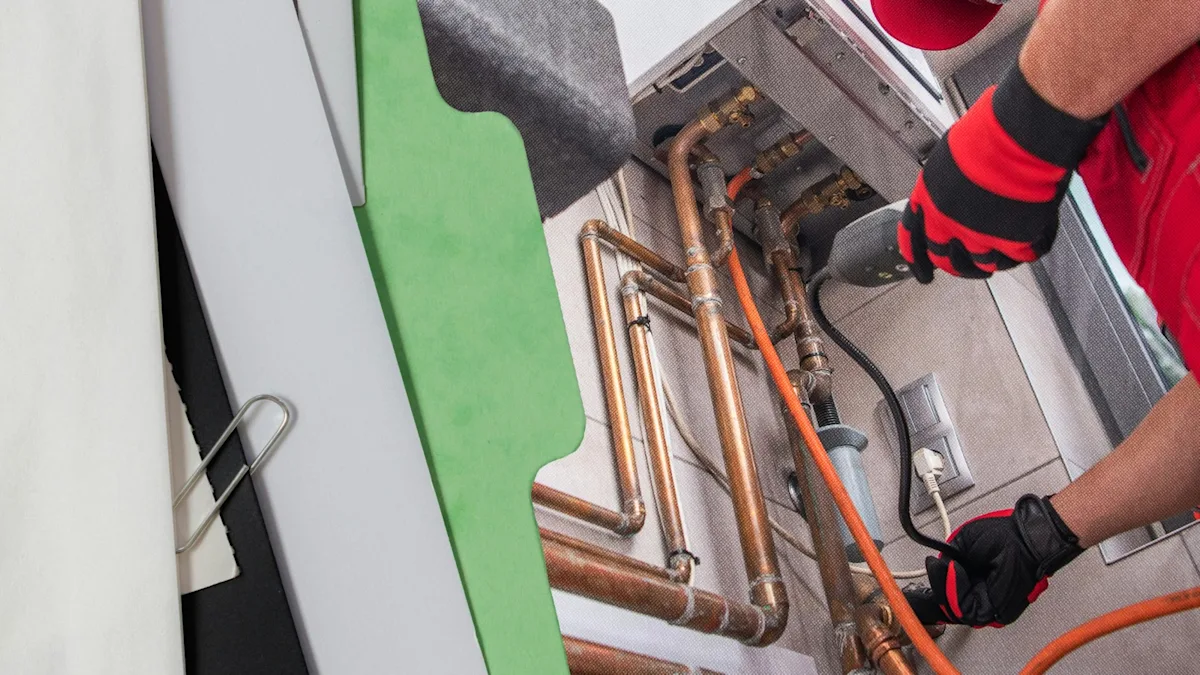
Figuring out how to start an HVAC business takes less time than most people think. Getting your EPA 608 and filing paperwork matter. The harder part of starting an HVAC business is setting up the money side early so the company still has cash when shoulder season hits and the phone slows down.
This guide walks the seven moves that shape year one of starting your own HVAC business, in the order they need to happen, from the business plan through the bank accounts. The point is simple: keep cash in the business when October gets quiet.
What are the steps to start an HVAC business?
Starting an HVAC business in a structured order saves cash and prevents rework. Most new operators who fail in year one don’t fail at the trade; they fail at the sequence, spending on the truck before insurance binds or running service calls before the accounts are set up.
The work of starting a HVAC company breaks into seven steps:
Get licensed and certified.
Register the entity.
Bind insurance and bonding.
Buy the truck and tools.
Line up the first customers.
Set up the financial accounts.
The rest of this guide walks each step in order, starting with the plan.
How do you build your HVAC business plan?
The business plan is where most new operators either anchor the year or drift into chaos. Four things shape it: year-one revenue projection, break-even, service area, and startup capital needed before month one.
Year-one revenue projection
Start with a conservative revenue projection built month by month, not as an annual lump. Because residential cooling demand concentrates in summer, revenue for a solo operator typically weights heavily toward the warm months, which is exactly why averaging the year hides the shoulder-season problem before it starts.
Break-even
Break-even sets the floor. Add fixed monthly costs (truck payment, insurance, shop or storage, software, owner’s pay baseline) and divide by average job margin. For example, if fixed costs are $8,500 a month and average job margin is $280, break-even works out to roughly 30 jobs a month. That’s the number to beat in October, not in July.
Service area
Service area defines the rest. A tight drive radius from home base keeps fuel costs controlled and techs productive. Define it by ZIP code, map the housing stock (age of homes, equipment aging out), and match it to the target customer: homeowners with old systems, property managers with rental portfolios, or a deliberate mix.
Pricing model
Pricing model comes next. Flat rate pricing sets a fixed charge per repair regardless of how long it takes, and it beats time-and-materials for most new operators. Repairs are priced from a flat-rate book, and a full system changeout is a multi-thousand-dollar ticket: a full system replacement may range from $8,000 to $12,000 on average, depending on tonnage and SEER2 requirements. Time-and-materials punishes efficient techs and invites billing disputes; flat rate protects margin and makes the customer experience predictable.
Startup capital
Startup capital pulls it together. Between truck, tools, insurance, licensing, marketing, and several months of operating expenses, plan for meaningful startup capital before the first service call. Undercapitalized operations fail in shoulder season, not because demand dried up, but because the cash ran out before the phone rang again.
With the plan built, the next step is licensing.
What licenses are needed to start a HVAC business?
Licensing in HVAC is jurisdiction-specific. A contractor licensed in one Colorado county may not be able to pull permits in the next, and the gap shows up the morning a building inspector asks for paperwork that doesn’t exist.
HVAC licensing stacks three layers: federal, state, and local. Miss one and the job stalls.
Federal: EPA Section 608 certification is required for anyone handling refrigerant. Universal covers all equipment types. Without it, no refrigerant purchases, no service calls.
State: Varies widely. California requires a C-20 through the CSLB. Colorado, New York, and Missouri have no statewide license and push requirements to local jurisdictions. ACCA publishes state licensing maps as a starting point.
Local: Most jurisdictions require a general business license and mechanical permits for specific job types, both separate from your contractor license.
NATE certification isn’t legally required, but it signals credibility. A2L handling matters now that production of R-410A units ended January 1, 2025, though existing inventory of higher-GWP HFC equipment manufactured or imported before January 1, 2025, can be installed until January 1, 2026.
With licensing sorted, the next decision is how to structure the business itself.
How should you structure and register your HVAC company?
Most operators starting a HVAC company begin with an LLC, then elect S-Corp taxation once income justifies it. An LLC electing S-Corp taxation splits income between a reasonable salary, subject to payroll taxes, and distributions that aren’t subject to self-employment tax. That can mean meaningful annual savings, but it also brings a structural requirement that hits HVAC harder than most trades: consistent payroll.
That payroll requirement is where seasonality bites. July can look strong, but October still has payroll, quarterly estimates, and bills due when service calls drop. If you set owner’s pay at $8K per month based on summer billing, you need that same $8K hitting payroll when revenue thins out in shoulder months.
The fix is to set a sustainable startup target you can pay year-round, not one pegged to peak billing. Build it from the full-year revenue projection divided across 12 months, not the summer run rate. Any surplus in July can move to a distribution, the seasonal reserve, or the profit account instead.
Setting up QuickBooks Online connected to your checking account from day one keeps payroll records clean and makes quarterly tax estimates less painful. Talk to a CPA who works with trades businesses before making the election.
File with your state’s Secretary of State, get an EIN from the IRS, and register for state and local taxes. Once the entity is filed, insurance has to be in place before the first truck hits the road.
What do you need to start a HVAC business in terms of insurance and bonding?
Insurance gaps get expensive fast in HVAC. Before the first truck is lettered and the first tech heads to a rooftop or crawl space, one uncovered claim can blow up the startup budget.
A new HVAC operation typically carries four core policies, each addressing a different risk on the job:
General liability: Covers property damage and third-party injury on the job.
Workers’ comp: Required once you have employees; rates reflect the risk profile of rooftops, crawl spaces, and high-voltage electrical systems. California is stricter: HVAC (C-20) contractors must carry workers’ comp even without employees, and coverage for a sole proprietor typically runs $2,000-$4,000 annually.
Commercial auto: Covers accidents involving business vehicles and is non-negotiable the moment the truck gets lettered.
Inland marine (tools and equipment): Protects the gauges, recovery machines, and meters on the truck, often thousands of dollars in equipment at any given time.
Bonding requirements are state-specific and vary significantly. California requires a $25,000 contractor license bond for all licensed contractors. Arizona uses a volume-based bond ranging from $1,000 to $100,000. Check your state’s licensing board for exact bond amounts before you finalize the budget.
The timing matters here. Bind every policy before the first service call, because even a week of exposure can end a business before it starts.
With coverage bound, the next purchase is the vehicle and the tool loadout it carries.
What does it actually cost to get your first truck on the road?
The truck decision runs the year-one budget. A van that looks cheap on the lot becomes a problem the first Wednesday it can’t carry a condenser and a full tool loadout at the same time, and the tech ends up making a second trip back to the shop on a paid service call.
For most solo operators, a used cargo van or service body truck is the practical starting point. The vehicle needs to carry common replacement parts (capacitors, contactors, fan motors, and a few pounds of refrigerant) plus a diagnostic tool loadout at minimum:
Manifold gauges for pressure readings on the refrigerant circuit
Quality multimeter for electrical diagnostics
Refrigerant leak detector for finding slow leaks before they drain the system
Recovery machine for any job where refrigerant has to come out
A reliable used vehicle keeps more cash in reserve for the months when you need it most.
Beyond the truck, plan for a meaningful equipment budget to stock the van for common service calls. The equipment itself usually secures the financing, and payments can be structured to match seasonal billing cycles.
One other lever worth setting up now: distributor accounts. Equipment distributors like Carrier, Trane, or Lennox sometimes offer net-30 terms to contractors with established accounts. New operations often start COD, but building that trade credit relationship early becomes a real float tool once you’re running installs consistently.
The truck is stocked and ready. Now the question is how to keep the phone ringing.
How do you get your first HVAC customers?
Customer acquisition is where most new operators guess their way through year one. The tech skills got them here; the marketing side is uncharted territory, and a few thousand on yard signs, paid ads, or lead services can vanish before a single changeout closes.
The good news is demand is there. Employment of HVAC mechanics and installers is projected to grow 8 percent from 2024 to 2034, with about 40,100 openings projected each year over the decade. The job is to capture it locally.
Customer acquisition in year one breaks into four moves, in order:
Set up Google Business Profile. It’s free, gets you high-visibility for “HVAC near me” searches, and reviews compound over time.
Build local referral relationships. Real estate agents, property managers, and home inspectors are the highest-leverage contacts. A single property manager with a rental portfolio can keep shoulder season busy.
Offer customer financing on replacement work. Platforms like GreenSky, Synchrony, and Service Finance let homeowners finance installations on monthly payments. On replacement work, financing is table stakes.
Pitch a maintenance agreement on every service call. Offer every service call customer an agreement: two PM visits per year, priority scheduling, a discount on repairs. That recurring base smooths the shoulder season gap the seasonal reserve is built for.
With customers lined up, the last step is the one most new operators get wrong: the bank accounts.
How do you set up financial systems before your first shoulder season?
Seasonal cash gaps are the main money problem in HVAC. Summer deposits make the account look flush, then shoulder months cut revenue while payroll, fleet payments, insurance, and rent keep showing up.
Set up the accounts before the first deposit lands. A Profit First setup for HVAC separates each deposit into operating expenses, owner’s pay, tax, profit, and a seasonal reserve. Start with sustainable allocations that hold whether July or October is the billing month:
Profit: 1%
Tax: 1%
Owner’s compensation: 8%
Operating expenses: the rest
These are starter numbers. Step allocations up each quarter toward HVAC-calibrated targets (profit 5-10%, owner’s pay 10-15%, tax 15%, operating expenses 60-70%) as the business stabilizes.
The seasonal reserve account is what covers fixed costs through slower months. Set the target by adding up fixed monthly costs (payroll, fleet, insurance, shop lease) and multiplying by the number of shoulder months to cover. At $12,000 in fixed costs and two slow months, the reserve target is $24,000. Fund it during peak months so the cash is there when October arrives.
Look for a banking platform that lets you set up separate checking accounts with no monthly maintenance fees and automated percentage-based transfers. That makes transfers effortless, and each allocation gets its own bucket from day one. The same structure isn't unique to HVAC—it applies across home services broadly, and Relay's home services banking page offers it industry-wide.
Build your HVAC business on a financial foundation that survives shoulder season
The money setup decides whether the business makes it through year one. Relay gives HVAC businesses the structure Profit First requires, with allocations that match the seasonal rhythm of service work. Direct QuickBooks Online sync keeps the books clean from the first deposit, so quarterly taxes, CPA handoffs, and year-end reviews stop being a scramble.
The platform scales from a solo operator’s first account to 20 checking accounts1 and a full team of debit cards2, so you’ll already have everything you need when the second truck, the service manager, or the commercial maintenance book shows up. Open a Relay account to build your Profit First structure before your first service call hits the books.
1Relay is a financial technology company and is not an FDIC-insured bank. Banking services provided by Thread Bank, Member FDIC. 2The Relay Visa® Debit Card is issued by Thread Bank, Member FDIC, pursuant to a license from Visa U.S.A. Inc. and may be used anywhere Visa debit cards are accepted.
Frequently asked questions
How much does it cost to start an HVAC company?
Plan for meaningful startup capital covering the truck, tools, insurance, licensing, marketing, and three to six months of operating expenses before the first service call. The actual number swings widely depending on whether the truck is new or used and how aggressive the marketing spend is, but underfunding the operating reserve is what usually ends year one, not the truck choice.
What licenses do I need to start my own HVAC business?
EPA Section 608 is the federal baseline for anyone handling refrigerant. State contractor licensing varies widely, and some states push it down to local jurisdictions, so check your state’s licensing board and local building department for the specifics that apply to you.
Should I start my HVAC business as an LLC or S-corp?
Start as an LLC and elect S-Corp taxation later, once income justifies the payroll requirements that come with it. The S-Corp election can save meaningful money on self-employment taxes, but it requires consistent year-round payroll, which creates tension with seasonal billing in HVAC. Talk to a CPA who works with trades businesses before making the election.
When should I start selling maintenance agreements?
Day one. Every service call customer gets offered an agreement, and the base compounds from there into recurring income that smooths the shoulder season gap in year two and beyond.
BANKING FOR THE SELF-MADE
Get started in minutes.