


It's Sunday night and your dashboard shows $47,000 in the bank. Tomorrow $18,000 leaves for payroll, $12,000 for a supplier shipment, and next week the $8,000 quarterly tax bill hits. How much of that balance is actually safe to spend? You've built a successful operation, yet this question still requires mental math and crossed fingers.
Most advisors recommend keeping three to six months of operating expenses on hand, but 82% of small-business failures trace back to cash-flow blind spots that make hitting that target very difficult. The issue isn't discipline or business acumen. It's visibility into what's committed versus what's truly available when you need to make a decision.
In this article, we'll walk through the business of cash reserves and answer the most common questions. By the end, you'll have a clear reserve target, a system to see what's truly available to save, and the account structure that turns good intentions into actual protection.
What Exactly Is a Business Cash Reserve?
Think of a cash reserve as money with just one job: stepping in when life blindsides your business. It's cash you can access within a day or two to cover emergency payroll, late rent, or that surprise repair that can't wait. This money sits in a separate account,usually savings or money market, because you hope not to use it.
But here's where many business owners get tripped up: the balance in your operating account isn't your reserve. If your checking shows $50,000 but $35,000 is already committed to next week's payroll, supplier invoices, and quarterly taxes, you really have $15,000 available. That $15,000 is the start of a genuine reserve. The rest is committed cash that’s leaving your account regardless of how careful you are.
Why Do Businesses Need Cash Reserves?
The real value of cash reserves isn't just having money for emergencies, it's the clarity that comes from knowing exactly what's protected and what's available.
Here's what proper reserves enable for your business::
Hiring without hesitation: Stop checking your balance three times before posting that job listing. When you can see what's committed versus available, you know if you can afford the hire.
Growth decisions without gambling: That equipment upgrade or new location becomes a strategic choice instead of a stressor. Reserves create room to say yes to the right opportunities.
Confident operations without cash flow anxiety: No more wondering if payroll will clear or if that supplier payment will bounce. When reserves are visible and protected, you run your business with certainty instead of hope.
Tax season without panic: Quarterly tax bills stop feeling like surprise attacks. You saved systematically because you could see what was actually available to set aside.
Survival during disruptions: While restaurants typically last only 16 days without revenue, businesses with clear reserves for 3 to 6 months can weather most disruptions without desperate pivots.
The difference between businesses that survive downturns and those that don't sometimes comes down to visibility and the decisions it enables.
How to Calculate Your Business's Ideal Cash Reserves
Most businesses use one of two methods to calculate their reserve target. The most common is the expense-based approach, but the revenue-based approach is often better for seasonal businesses. Both work, but first use this formula to find out what’s actually available to allocate:
“Current Bank Balance” — “Committed Expenses” = “What's Actually Available for Reserves”
Once you have that number in hand, it’s time to calculate your reserve target using either the expense-based method or revenue-based method:
Use the Expense-Based Method
1. Calculate your monthly operating expenses: Pull last year's profit and loss statement. Add up everything it costs to keep the lights on: payroll, rent, utilities, software subscriptions, insurance, loan payments, supplies, even the Friday bagels. Divide that total by 12 to get your monthly burn rate.
2. Multiply by your target coverage period: Most financial experts recommend 3 to 6 months of expenses as your baseline reserve. Start with 3 months as your minimum target, then build toward 6 months as your business stabilizes.
3. Adjust for your business stage: Service businesses with predictable retainers can operate at the lower end at 3 months. Funded startups should target 12 to 18 months of runway to reach their next milestone.
Use the Revenue-Based Method
1. Calculate your annual revenue: Use last year's total revenue as your baseline. If you're in a growth phase, use this year's projected revenue instead.
2. Apply the appropriate percentage: Seasonal businesses typically need 15 to 30% of annual revenue in reserves. Use 30% if your slow season is particularly slow, such as seasonal retail or landscaping businesses. Use 15 to 20% if seasonality is moderate, like event planning or tax prep.
3. Adjust for volatility: If your revenue swings wildly between peak and off-season, lean toward the higher end at 25 to 30%. If you have some steady income year-round, the lower end, around15 to 20%, is probably fine.
How to Build and Maintain Business Cash Reserves
"Set aside 10 percent every month" sounds simple until payroll, taxes, and rent swallow the transfer before it clears. That's why building a financial safety net requires visibility, not just stricter budgeting.
Best practices across industries include these steps:
Separate what's already spoken for: Open dedicated accounts for taxes, payroll, and loan payments so committed funds never look like spendable income. A single checking account showing $50,000 feels abundant. Split that into separate tax and payroll accounts, and suddenly you see the real picture: $15,000 is your actual cushion.
Automate transfers to your reserve account: Start by sweeping 5 to 10% of each deposit into a reserve account. When you barely notice the pinch, bump it to 15%. The key is making it automatic.
Define when you'll actually use reserves: Reserves cover true emergencies like lost revenue or equipment failure. Credit handles short-term timing gaps when a big invoice comes due before a payment lands. Decide on your number line and stick to it, so your reserves don’t disappear into daily operations.
Recalculate quarterly: As expenses or headcount grow, refresh your targets so your safety net stretches with the business. What protected you at five employees won't cut it at fifteen.
This approach follows the Profit First sequence: income comes in, commitments get funded first, then reserves get their cut, and finally, what's left goes toward growth. This approach forces you to make decisions based on what's truly available instead of hoping there's enough left over at month's end.
Where Should a Business Keep Its Cash Reserves?
Businesses that leave "reserves" inside their main checking account often watch them disappear within six months. When every dollar has its own dedicated space, it stays there when the unexpected invoice,or opportunity shows up.
Your reserve account has one job: be there when you need it. That means staying liquid, sitting in a separate account from operating funds, and earning while it waits. These are the best account types for your cash reserves:
Business savings account: This type of account handles all three requirements. Plus, institutions like Relay now offer accounts with yields up to 3.00% APY (Annual Percentage Yield),2 so your money works while you work.
High-yield money market account: This type of account typically offers slightly higher rates, plus check-writing privileges for true emergencies.
You want to avoid risky investments or long-term CDs that lock up your funds.
Build Reserves With Clarity, Not Guesswork
You know the target: depending on your business, you’ll want about 3 to 6 months of expenses sitting safely in reserves. The math isn't the hard part. Seeing what's actually available to save is what keeps most businesses from getting there.
When everything sits in a single account, committed payroll appears identical to spendable funds. You can't build reserves from money that's already spoken for.
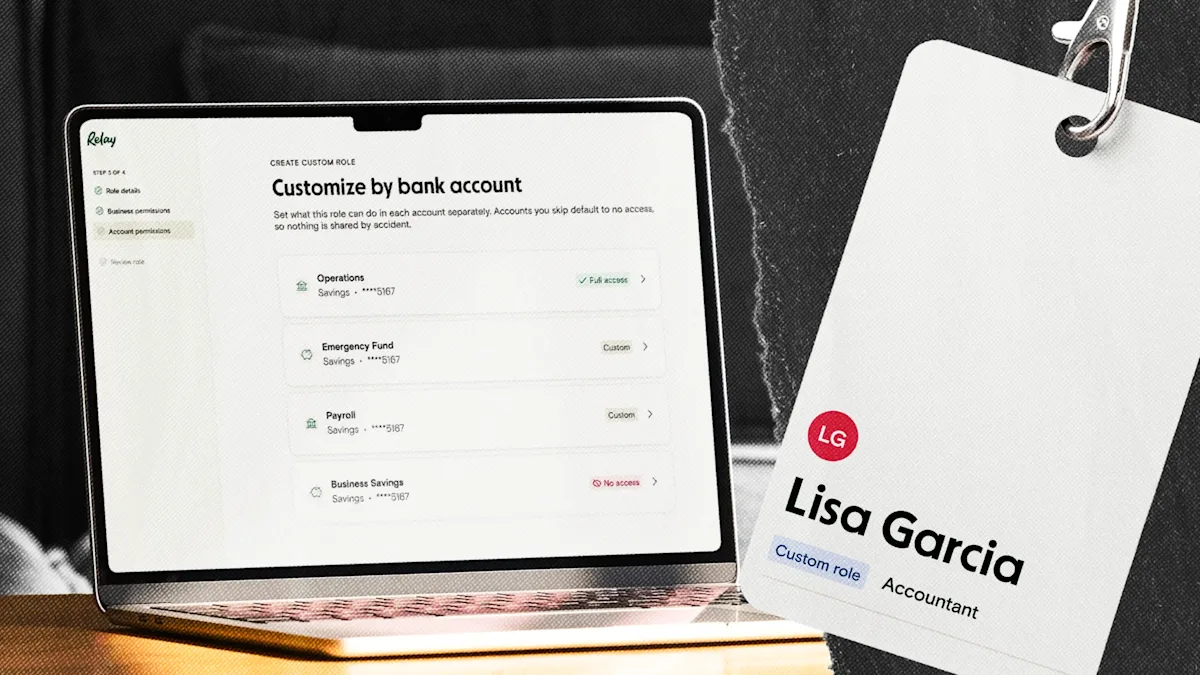
Relay's multiple account system makes this separation simple. Set up dedicated accounts1 once for operating expenses, taxes, payroll, and reserves. Then automate the transfers so your money flows exactly where it needs to go without manual moves each week. Everything connects to QuickBooks Online or Xero, so your books stay clean while your reserves actually build.