

There's a version of New York City that most people walk right past. It lives behind the doors of independently owned shops—the ones that don't advertise, don't optimize for rankings, and don't have a corporate office deciding what goes on the shelves. Caroline Weaver has made it her life's work to make sure people actually go inside.
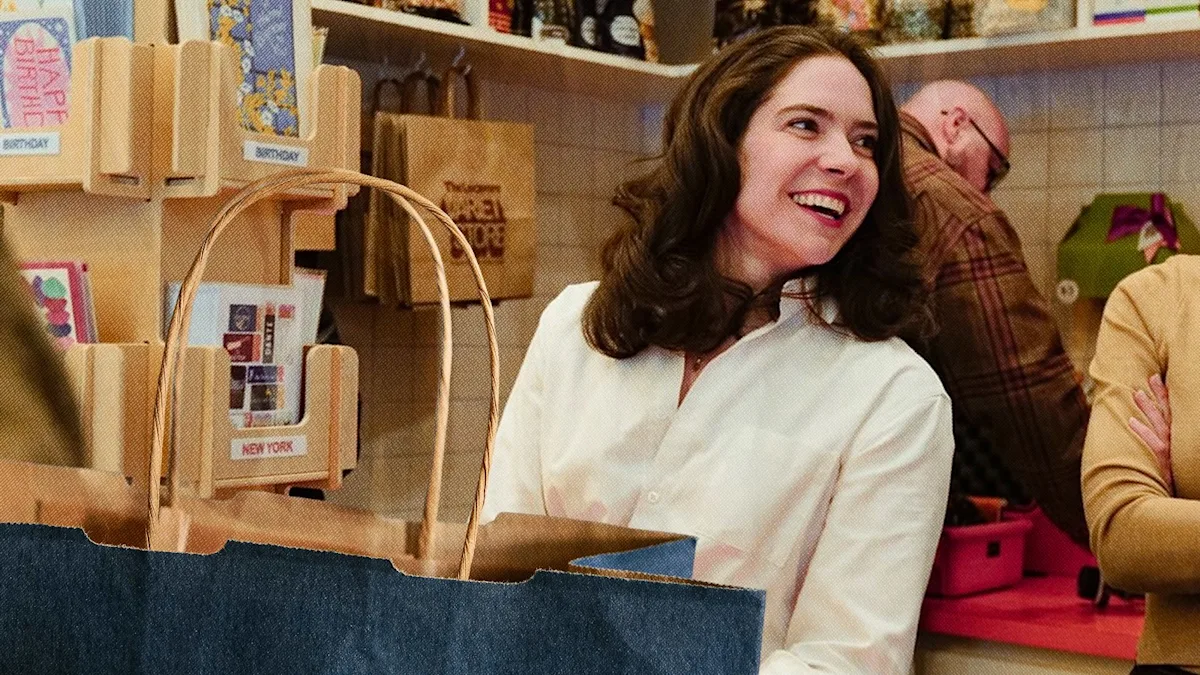
Caroline is the owner of The Locavore—a two-part operation she built from the ground up in Brooklyn. The Locavore Guide is a free, walkable directory of independent retail shops across every neighborhood in New York City, built from years of Caroline literally walking the streets and cataloging what she found. The Locavore Variety Store is the physical embodiment of everything she's trying to get people to buy into: a general store that carries products made within roughly 100 miles of the city, all from independently owned brands.
For National Small Business Month, we sat down with Caroline in her shop to talk about what it really took to build something like this—and what it takes to keep it alive.
Can you introduce yourself and tell us a bit about what you do?
My name is Caroline Weaver, and I own The Locavore Variety Store and run The Locavore Guide.
Before you became a business owner, what drew you to shops in the first place?
I've only really realized in hindsight that for me it was always about shops. When I was a child, I grew up in a rural town and had this idea that I was going to be a fashion designer—but looking back, it was never about the clothes. It was about the world in which they exist. And that is what a shop is. I went to shops to see what was out there and to imagine a life that was mine as an adult.
When I was in middle school, maybe not even—maybe fifth grade—a shop opened in my town called Twisted Sisters. It was the first sort of lifestyle boutique we had, and they sold all this stuff I had never seen before. Of course, I had no money to buy anything, but I was discovering a world through objects. And the women who owned the shop were so kind to me as a child, because I think they saw that I was learning something by being there. It really was a form of discovery.
What eventually made you take the leap and open your own shop?
My very first shop was a stationery shop that specialized in pencils—an idea I had in college that was almost a joke amongst my friends. They said it would be my retirement job: I'd be an old lady in a pencil shop. Then I moved to New York and worked in somebody else's shop, and I had a really bad first winter. And I truly woke up one day and thought, "What am I doing? This is pretty low risk—I'm buying pencils. I'm just gonna open this pencil shop."
And I did. And I was delusional, and I was also 23, so I was incredibly naive. But I think I needed that naivete in order to take the plunge.
Running your own business takes a lot of confidence. Where does yours come from?
I have a theory about people who open shops, which is that we're all inherently introverted people who are creative and have a very clear vision of the world. We open shops to create a world in which we can exist on our own terms and confidently share that world with other people. It's our way of connecting with others in a way that's comfortable—it's in our container, and it's ours.
I was a very shy child. But when I opened my first shop, I got to exist in my little container, in my perfect world that I created. It wasn't until then that the confidence I always knew I had, but maybe didn't present itself to others, kind of flourished. And I think that's the case for a lot of shop owners.
For anyone who hasn't heard of The Locavore, how would you describe it—both the guide and the shop?
My business started with an online directory where I decided I was going to walk every single neighborhood in New York City to catalog its independent retail shops, because there isn't really an unbiased resource for that. I wanted to create a free resource for people to more easily find shops to spend their money at, because there are so many people who love talking about shopping local and know it's a good thing to do—but they don't want to take that extra step to find places, especially outside their own neighborhoods.
Along the way, I discovered a lot of brands and a lot of people who make things. And the shop is sort of my own manifestation of the lifestyle I'm trying to convince people of. We specialize in products made within about 100 miles of New York City, and everything is from independently owned brands in every category. It's really and truly a general store.
What does "local" actually mean in a city as big and competitive as New York?
Historically, New York is a city full of creative people with a lot of ideas. And it's getting harder and harder, because renting a commercial space to make your product or run a shop is just so prohibitively expensive for so many people. So I think it's especially important for someone like me to find all these people doing creative things and make sure that people know about it.
So much of what happens in our culture now is so homogenous and so placeless. You might be buying all this stuff on the internet with no idea where it's coming from—but there are also people right in your own backyard making these things, and it's attached to this place. There is a sense of place. And I think that's a really important thing to preserve. That's what the shop is for.
Walk us through what a normal day actually looks like for you.
On a good day, I wake up around six. I try to make it to a 6:30 workout class—though if I'm being truthful, that doesn't always happen. I come home, make coffee, write in my journal, get ready for work. I like to take my time in the morning so I can start from a place of calm.
I usually go to my office first, which I keep separate from the shop because I need a place to focus. A lot of what I do is writing—I'm always working on a book or a newsletter. I sometimes film videos first thing in the morning, often in other people's shops before they open so I'm not in their way.
Then in the afternoon, after getting all my admin done, I get to come to the shop. On my best days, that's what I get to do—just hang out here and not worry about rushing back to the office. I check in with Katie, our manager, and we talk about what we're buying for the season, what to restock, what's been selling online.
If it were up to me, I'd sit in my shop and talk to people all day long. But I know myself—if I come here at the start of the day, I won't leave when I think I'm going to. So I have to be very disciplined about saving it for later. It's the reward at the end of the day.
What's the hardest part of the job?
The hard part is the logistics and the money stuff. Nobody decides to be a shop owner because they want to sit at a computer and think about numbers. That's the part I dread. It's not fun, it's not stimulating—it's important, and I know that, but it's not the stuff I like doing.
I think I existed in a state of financial avoidance before I owned a shop. And now I have to think about money from so many different angles. It's really hard to run a shop when you're selling inventory from multiple brands—there are cash flow situations that are difficult because half of what I'm buying is paid with net-90 terms and the other half has to be paid in cash. Some people I have to mail a check to. There's sales tax paid quarterly. There are all these moving parts that are so easy to lose track of if you're not organized. And I'm a very organized person, but I'm also financially avoidant. It's been really hard to reckon those two things.
Is there a habit that's helped you stay on top of it?
It's such a small thing, but just the simple act of checking my bank account every single morning is really, really important. Then I'm not losing track of things. For so many tasks in my world, just opening the laptop is the hardest part. So I've found that if I open my bank account at the start of the day, I'm in there—the scary parts are beat down. I know how much money's in there, I'm going to pay my bills, I'm going to check my credit card statement, I'm going to log on and see which invoices are due soon, I'm going to reconcile all of that on the back end. And then a half hour later I don't even realize I just did the thing I dread the most.
Even writing, which is one of my favorite things I do every day—it'll take me three hours to open a laptop, and then I open it and I'm like, why didn't I do this three hours ago? You usually just have to start.
What do you wish someone had warned you about when starting out?
I think especially when starting a shop, the most important thing you can do is just take it slow and learn that you're in control. You don't have to grow. Nobody's written a handbook on how to open a sustainable shop. So you're learning by trial and error, by asking questions, by consulting other people who've done the same thing.
In my first shop, we experienced a lot of rapid growth very early, and I rode that wave. I grew with it. And then I looked around three years later and wondered, "How did I end up here?" That was a choice I made, and I didn't even realize I didn't have to make it. What's so amazing about an independent business is what happens when you're in that space of being small and in control—and you lose that when you follow organic growth you didn't even want to follow. Very often it doesn't even result in more money. It's just more responsibility.
What did the closing of that first shop teach you?
When I announced we were closing, everybody was sad—but they also wanted to know how they could save it. They wanted to start a GoFundMe, buy the shop, do whatever it took. And I was, in a way, angry about it. Because it made me think: why are we only willing to save a shop when things are impossible to turn around? Why aren't we shopping at the shops we love on a regular basis so they don't have to be saved?
The number of neighbors who came in and said, "Oh, I'm so sad you're closing—I've walked by every day for five years and this is the first time I've come in." They didn't realize they were part of the problem. People treat shops like the background of their lives when there's so much to gain from actually going through the door—not just treating it as a nice window to look into when you're walking to work.
That's the simplest lesson my first shop taught me: if you want the shops to exist, you have to actually shop at them.
What does community mean to you as a business owner—and how has it shaped this one?
In small business, your community is everything. You can't exist without it. A lot of us do this because we want to build a community around the thing we've done. And what's amazing is that I don't really know a lot of business owners who've had to go out of their way to find it. It's amazing how it just kind of shows up. If you build it, they will come—and that's really what happens.
On a practical level, so much of what we sell in this store came directly from our customers. They have a friend who makes an amazing product, or there's something they love buying every week and they wish they could get it around the corner. So we listen. We take that feedback. And what it does is build trust—it makes customers feel like we genuinely value them. Then they come by more often, even if it's just to say hi, get a snack, or tell us a story. It's about the things that happen when you're not exchanging money. And in turn, people understand that reciprocity and support your business because of it.
There's something else worth saying. When you have a shop, your business exists to hold space for people who just need a place to go. I've had customers in every one of my businesses who come in after therapy because it's part of their routine, because it feels good to look around and have a snack and talk to somebody about something completely inconsequential. We do that for people. And it really, really matters.
Where did that understanding of community come from for you?
My dad was a big part of it. He wasn't a shop owner himself, but he was very deliberate about where he spent his money. He understood that by spending deliberately, he was building social capital—making friends, earning respect in a small community. And when he passed, people told me stories about him I'd never heard before. I'd be somewhere and they'd recognize my family name and tell me something about the last time my dad was in. You can build a social life, support an economy, really exist in a place—just by opening a door and actually participating.
When did you first feel like this was actually working?
It wasn't until I started meeting actual people in public who came up to me and told me they watch my videos, or that they bought my guidebook and they've been using it, or they gave me real examples of ways my work had helped them live their lives differently. When that first started happening, I thought: oh, this is working. The thing that seemed impossible is actually working. It's so rewarding.
I make a lot of video content, and a lot of it is really transparent—we break down what it costs to run a business. There have been times I've admitted that things aren't working at this current moment and I'm nervous about the future. And every time I do that, people show up. They really do. They'll come in and say, "I came in because I saw your video and you're right—it's not the holidays and I should still be shopping local." That's really all I'm trying to remind people of. We need you in our shops outside of Christmas, outside of holidays, outside of any occasion where it feels like the virtuous thing to do. It's about living this way year round.
What's next for The Locavore?
I learned my lesson the first time—I'm not trying to grow this shop. I just want to have one perfect shop and continue to make it healthier and healthier. Our sales are growing, and I'll eventually make a state-of-the-shop video where I tell everyone we're comfortably making a profit.
Beyond that, my goal is to eventually build the framework for a directory like mine that people in any city and any part of the world could use—to give people the tools and all the lessons I've learned so they can do what I've done here. To just get more people out walking around their cities and discovering all the wonderful places run by actual neighbors. Why live in New York if you're not going to actually experience it and talk to your neighbors?
Finish this sentence: building a business is…
Building a business is the best way you can immerse yourself in a place. It's the best way that you can participate in a community—in the place where you live. And that's just the most rewarding thing.
This May, Relay is celebrating National Small Business Month with a series of stories from owners who chose the hard way—and built something worth keeping.
BANKING FOR THE SELF-MADE
Get started in minutes.