
00Foreword


2026 edition
Cash Flow Compass 2026 edition
What 1,031 small business owners told us about money, freedom, and how much of each they actually have.
Published October 2026Relay's annual report on small business cash flow
Owning a business is the new American Dream
We usually talk about the American Dream like it’s a destination. But for the business owners we surveyed this year, the appeal of ownership starts well before any finish line.
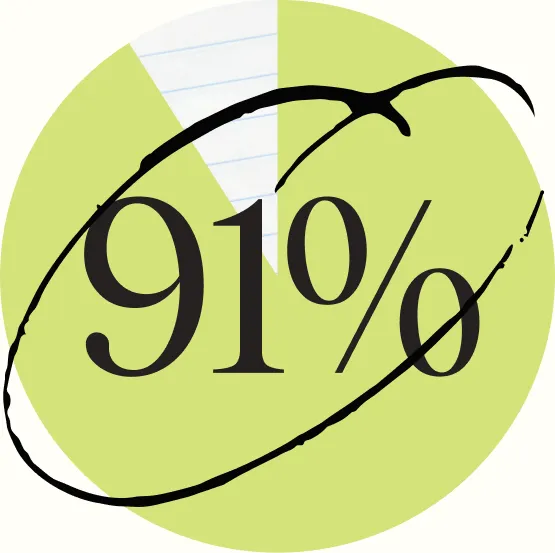
Ninety-one percent say small business ownership is a key part of achieving the American Dream today. And the dream they describe is less about reaching a distant milestone and more about what ownership makes possible along the way: independence, work they care about, flexibility, and the opportunity to build wealth.
But the dream still has bills attached. Payroll, vendors, growth plans—they all need cash. And when money disappears, the ownership dream goes with it.
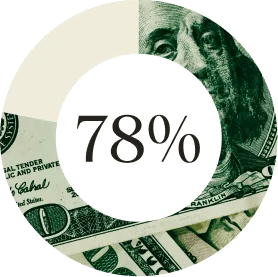
In the past year, 78% of owners experienced at least one unexpected cash flow issue, from rising fixed costs and supply-chain disruptions to delayed payments and changing interest rates. The knock-on effects come fast: a late payment becomes a delayed hire. A cost increase becomes a missed investment. “What do we want to do?” suddenly becomes “What can we afford to do?”
If the American Dream now looks more like owning a business than owning a white picket fence, what protects that freedom once the business gets complicated?
This year’s Cash Flow Compass looks at the pressures that narrow owners’ choices; when and why business owners dive deep into their finances; how AI is giving time back and (sometimes) taking it away; and what practices keep owners in control when cash gets tight.
About the Cash Flow Compass
The Cash Flow Compass is Relay’s annual survey of 1,000 American small business owners. The report explores what it really takes to build a financially resilient small business. This year’s report explores the pressures that can narrow owners’ choices as a business grows, and the habits, systems, and financial structure that can create more room to act.
Brought to you by Relay
The digital banking platform built for modern small businesses. Banking, bills, invoices, expenses, and more—all in one place, all built to give self-made entrepreneurs clarity, confidence, and control over their money.

What you need to know
The American Dream is alive and running a small business. Ninety-one percent of owners say owning a small business is a key part of achieving the American Dream today. For 57%, it started with the chance to be their own boss.
Cash flow got a little less chaotic. It did not get easy. Unexpected cash flow issues edged down from 88% last year to 85% this year for businesses in matching revenue ranges. But among owners who encountered a cash crisis, 42% still didn’t have the reserves to absorb the surprise.
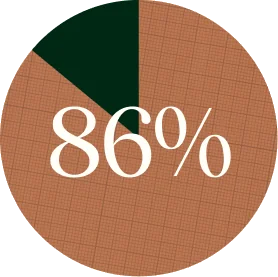
Eventually, the money demands more attention. Eighty-six percent of owners reached a point when the financial side of the business needed a closer look. For 18%, that came with worries the business might not survive. For nearly one in four, it came when the business got bigger—and harder to manage.
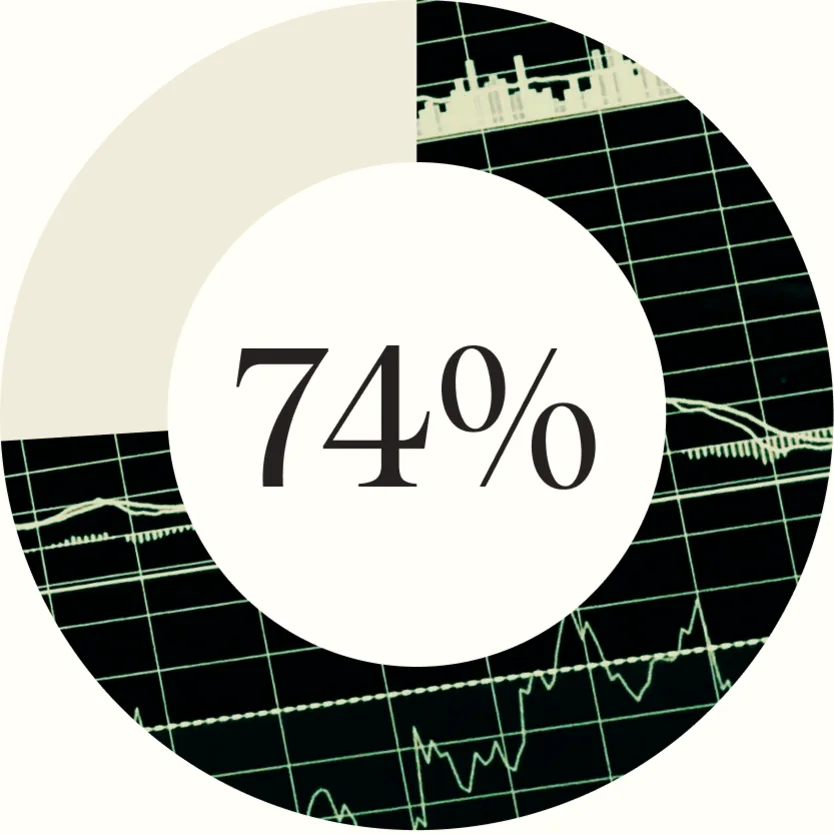
AI is welcome in the office. The bank account has stricter visiting hours. Seventy-four percent of owners use AI to some degree, but they’re much more likely to put it to work on marketing, reporting, and operations than on financial management or cash flow.
Bad months happen. Financial visibility can change how they’re handled. Most businesses face unexpected cash flow issues. But when incoming cash dropped sharply, businesses using five or more accounts had nearly 3× the expense coverage of those using just one.

From Crash Out to Cash Out
Oct 29, 20261:00 PM ET45 minutes
What happens when one bad month makes you question the whole business?
Join us live as two entrepreneurs tell us about the month that tested them, how it changed them as owners, and the practices they think every business should be using. Hosted by Mike Michalowicz.

Part one
Building businesses for freedom and control
For 91% of the owners we surveyed, small business ownership is a key part of achieving the American Dream today. Forty-one percent go further, calling it one of the last reliable paths to getting there.
But the dream they’re describing isn’t just some distant financial milestone. The version they’re chasing shows up in the day to day: having more say over their time, their work, their earning potential, the people they work with, and what they’re willing to compromise on. The business is a way to build wealth, sure—but also to build a life with fewer decisions made by somebody else.
Fifty-seven percent say being their own boss drew them to start or take over a business. Flexibility, passion for the product or service, and the opportunity to build income or wealth weren’t far behind.
These motives aren’t mutually exclusive, either. Owners want the freedom to make their own calls. They want the business to pay off. They want to care about the work, control their time, and build something sturdier than the next invoice cycle. And they’d like it all at once, thank you.
57%
started a business to be their own boss
46%
wanted more flexibility at work
40%
had a passion for their product or service
Independence matters across generations—but not in the same way
The younger a business owner is, the more they want it all. For Gen Z and millennials, independence and flexibility are practically neck and neck as motivators for starting a business, with passion and wealth-building close behind. Boomers put much more daylight between independence and everything else: 67% cite being their own boss as the reason they started a business, with other motivations trailing well behind.
Both want more of a say in how their lives are run, but younger owners stretch that definition toward control over their time, work, earning potential, and the life wrapped around all of it. That could reflect the social and economic pressures that make it harder to squeeze into somebody else’s schedule; caregiving, school calendars, and return-to-office expectations can make flexibility feel out of reach when working on someone else’s dime.
For generations being told to “have it all” while the logistics keep getting worse, ownership could be one of the few ways to rearrange the deal.
Business owners aren’t running, they’re chasing the dream
While it isn’t uncommon for a passionate Tiktoker to show up on your For You page with a heartwrenching story about why they left their corporate job, it isn’t the main driver for starting a business. Less than one in ten business owners cite corporate disillusionment as the reason they went solo–significantly lower than goal-related reasons like independence or flexibility.
Reasons for starting a business, by generation:
| Group | Percent |
|---|---|
| Gen Z | 51% |
| Millennials | 50% |
| Gen X | 66% |
| Boomers | 65% |
| Group | Percent |
|---|---|
| Gen Z | 50% |
| Millennials | 50% |
| Gen X | 43% |
| Boomers | 31% |
| Group | Percent |
|---|---|
| Gen Z | 45% |
| Millennials | 43% |
| Gen X | 39% |
| Boomers | 26% |
The work matters, but most owners expect it to pay
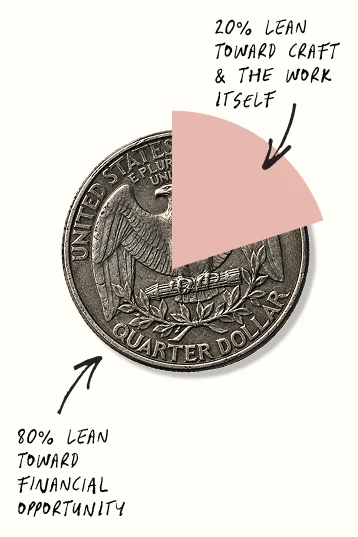
Owners are clear-eyed about the money, too. When asked where they fall between caring most about the work itself and the financial opportunity, 80% lean toward the financial side. But most aren’t planting a flag at either extreme. They want the business to pay off without hollowing out the part of the work that made it worth doing in the first place.
The financial pull is particularly strong among younger owners. Eighty-five percent of both Gen Z and millennials lean toward the financial opportunity, compared with 75% of Gen X and 72% of boomers. Younger owners seem perfectly comfortable wanting both: work they care about and a business that makes real money. Loving what you do is part of the deal. So is having something to show for it.
| Group | Percent |
|---|---|
| Gen Z | 85% |
| Millennials | 85% |
| Gen X | 75% |
| Boomers | 72% |
Younger owners are buying into the dream
Starting from scratch is still the most common route into ownership—but younger owners are more likely to buy their way in. Just 55% of Gen Z owners and 56% of millennials started from scratch, compared with 78% of boomers. And they’re roughly twice as likely to have bought an existing business: 13% of Gen Z and 14% of millennials, versus 7% of boomers. For some younger owners, the path to more independence may start with something practical: skip the blank page and buy a business that already has customers, revenue, and a set of keys.
Almost every owner puts something ahead of maximizing revenue
The business has to make enough money to survive. After that, owners start asking a more interesting question: what is all that effort supposed to buy them?
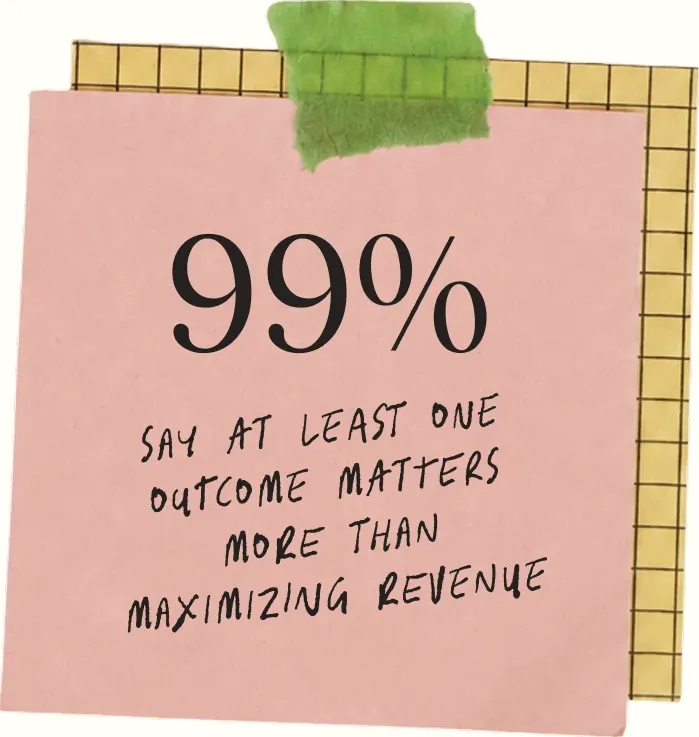
For almost everyone, the answer is something beyond a bigger top line. Ninety-nine percent say at least one business outcome matters more than maximizing revenue—including enjoyable work, maintaining quality, long-term customer relationships, and control over their time.
Revenue and profit give owners room to keep a great employee through a sluggish month, make an investment before the window closes, or turn down the client who is clearly preparing to become a recurring calendar emergency. So the money matters, but mostly because of what it lets the owner protect: independence, good work, solid relationships. Maybe even the occasional afternoon that doesn’t somehow get overrun with meetings.
“...Today, I think the American Dream is living in self-expression—being aligned with what you feel compelled or called to be. And I think entrepreneurship is the pathway to get there.
... It used to be very rags to riches. I think it’s now meaningless to meaningful.”
-Mike Michalowicz, author of Profit First
Outcomes that matter more than maximizing revenue
| Doing work I personally enjoy | 48% |
|---|---|
| Maintaining product or service quality | 43% |
| Building long-term customer relationships | 42% |
| Having control over my time | 40% |
| Having predictable income | 35% |

“I always knew I wanted to be a business owner. My mom owned a salon when I was younger, and I always had that entrepreneur bug in me.
Her salon was in the back of our house. People would come to our back door, my dad would bring them cheese and wine—it was really intimate. When I decided to open my own space, I wanted to recreate that feeling.
Now it feels like you’re at your best friend’s house getting your hair done. We’re an LGBTQ safe space, we’re inclusive, we’re community-based. It’s a happy place.”
The bottom line
Owners are asking business ownership to do a lot: give them more say over their time and work, create real financial opportunity, and leave room for everything they care about beyond revenue. That’s their version of the American Dream: less a finish line than more control over the day-to-day. The money makes the control possible. And the more financial room the business has, the more freedom the owner gets.

Part two
Independence has a minimum balance
Seventy-eight percent of business owners ran into at least one unexpected cash flow issue in the past year. That’s more than three out of every four dealing with rising costs, supply-chain disruptions, delayed payments, shifting interest rates, or some other expense the spreadsheet didn’t RSVP for.
But cash flow still isn’t predictable. For a small business, the money coming in can still bear very little resemblance to the money that needs to go out.
Cash coming in can swing dramatically from month to month
In Relay’s customer data, a typical business brings in 5.5 times as much in its best month than in its worst. Across a broader group, nearly one in three had at least one month with no inflow at all. That kind of swing makes planning harder, because even if the cash stops coming, the bills don’t. A great month can make the business look flush. A rough one can quickly reveal how little money there is in a pinch.
Month-to-month inflow swings
5.5x
Difference between a typical business's best and worst month for incoming cash
30.4%
Share of businesses with at least one month with no incoming cash at all
“The second income hits a high, the perception is, ‘This is the new norm.’ I thought I was crushing it, so I decided to buy that new car, and now the lease is $1,000 a month. Then the income comes back down—but the car stays with me.
We can very quickly increase expenditures to meet income. We really struggle cutting them when income decreases.”
-Mike Michalowicz, author of Profit First
Different industries get hit in different places
There’s no standard version of a bad cash flow year. For healthcare businesses, interest rates hit them hardest. For tech businesses, supply chain disruptions were the biggest pain. Financial businesses flagged unpaid invoices more than any other industry. But regardless of how it shows up, most businesses experience the same basic problem: money comes in and goes out on less-than-ideal terms.
Fewer cash flow shocks, but nearly half of owners got hit hard
There is some good news here. Unexpected cash flow issues edged down from 88% in 2025 to 85% this year when comparing the same revenue ranges. And among affected owners in those ranges, 58% had enough reserves to cover the surprise, up from 43% last year.
That’s meaningful progress. But 42% still didn’t have enough reserves to simply absorb the hit. They had to tighten spending, borrow money, negotiate payments, or find some other way through.
| Measure | 2025 | 2026 |
|---|---|---|
| Businesses that faced an unexpected cash flow issue | 88% | 85% |
| Businesses that had enough reserves to cover it | 43% | 58% |
When cash gets tight, something’s gotta give
Cash flow trouble rarely stays confined to the bank account; sixty-one percent of owners say it contributed to something else giving way in the past year. That could be missed growth opportunities, reduced employee hours, delayed projects, lost customers, or delayed investments. Fourteen percent say cash flow issues even contributed to thoughts about quitting the business altogether.
The cost, in other words, isn’t just the shortage itself. It’s the choices that start disappearing around it—sometimes for months. Relay’s own data shows that after a significant drop in incoming cash, it typically takes around six weeks for visible cash balances to return to their previous level.

61%
of owners say cash flow issues had a negative impact on the business
Top negative consequences of cash flow issues
| Consequence | Percent |
|---|---|
| Missed growth opportunities | 18% |
| Reduced employee hours or shifts | 16% |
| Delayed or cancelled projects and initiatives | 15% |
| Thoughts about quitting or ending the business | 14% |
Owners know their way around money, but there’s no standard playbook
Turns out, most owners don’t want to ignore the numbers. Ninety-one percent describe themselves as an expert in at least one area of financial management, and 97% have at least one practice in place—things like regular financial reviews, connected bookkeeping, separated accounts, and automated bill pay. But…consensus ends there.
Regular financial reviews are the most common practice, and even those are used by only half of owners. Connected bookkeeping reaches 41%; dedicated accountants, 40%. Just 40% separate money into accounts for different purposes, while only 29% automate transfers between them.
So even among owners who love a spreadsheet, there’s plenty of room to adopt more financial practices that keep the business safe. But this could be because of time and energy, and not because owners are avoiding the work.
91%
of owners describe themselves as an expert in at least one area of financial management
97%
use at least one of the listed financial practices


Top financial practices used by business owners
| Reviewing financials on a regular basis | 50% |
|---|---|
| Syncing bookkeeping software with their bank | 41% |
| Working with a dedicated bookkeeper or accountant | 40% |
| Separating accounts for different purposes | 40% |
| Automating or scheduled bill pay | 38% |
| Automating transfers between accounts | 29% |
| None | 3% |
Owners are planning ahead, but plans can’t account for every surprise
Among owners who are optimistic about their business, 96% say that optimism is grounded in a plan. And that plan isn’t aging quietly in Google Drive. Sixty-nine percent say they have a clear plan, have taken concrete action, and can see where the business is heading.
So the issue isn’t that owners are winging it. But all the planning in the world can’t account for a customer paying late, an insurance bill jumping, or sales going soft for a month—all while payroll looms next Friday.
96%
of owners say their optimism is grounded in a plan
69%
have a clear plan, and can see where the business is heading
28%
have a plan...but meaningful uncertainties remain

The trades boom is already under construction
Skilled-trades businesses are putting growth plans into motion: 32% are hiring, compared with 24% overall, and 36% are investing in operations, versus 31%.
They’re building talent, too: 39% offer in-house training. And just 14% say outside financing is part of the plan, compared with 19% overall.
The trades boom, in other words, isn’t only something big companies are pledging money toward. Small businesses are already building it themselves.
The bottom line
Owners know the numbers. They make plans. They put systems in place. Then a customer pays late, costs jump, or sales go soft, and the business has to absorb it somehow. A plan helps. But so does knowing which dollars already have a job, what’s actually free to spend, and how long the business can keep moving before the next decision gets made for it.
Get great with money
Subscribe to Relay's small business finance newsletter that demystifies and de-jargons money matters.

Part three
When the money demands more attention
Eighty-six percent of business owners hit a point when their finances demanded more attention, whether that’s a subtle turning point or a full-on alarm bell. After all, most owners start by focusing on the work—it’s only later that the money gets complicated.
As the business changes, the old way of managing the money can start showing its limits. More customers, bigger bills, tighter timing—eventually, just keeping an eye on things isn’t quite enough.
That realization comes from different places. Rising costs, tight cash flow, and growth itself were the most common triggers. Nearly one in five owners reached a point where they worried the business might not survive.
“We really struggle to see the compounding effects of the behaviors we’re doing. A business owner says, ‘Money worries me, but I’ve been in business for four years and I’m still getting by’—without really thinking about the credit card getting a little bigger and a little bigger.
Then the catastrophic moment happens, and suddenly you’re facing the truth. Sometimes it takes that financial heart attack to make a permanent shift.”
-Mike Michalowicz, author of Profit First
Growth itself can be a major wake-up call
Some turning points arrive with obvious warning labels. Growth, on the other hand, has the nerve to show up looking like good news.
Nearly one in four owners say the business getting bigger—and harder to manage—was what pushed them to tighten up their finances and pay closer attention to cash flow.
It’s a cruel little irony. More customers and more revenue are exactly what owners have been working for. Then come the bigger payroll, more vendors, more money already spoken for, and more gaps between doing the work and getting paid. The business can be winning on paper while the financial setup underneath starts losing the plot.

1 in 4
business owners said growth was their wake-up call

“We were starting to ramp up operations and getting into six figures and seven figures, but I did not have control over my expenses. It was like being handcuffed to a rocket ship.
I saw that bank account dropping every single month. We were offering all these great services, but we were also running out of cash to keep the business going.
Then someone congratulated me on making a profit, and I was like, ‘What are you talking about? I just took out a loan.’ That’s when I realized: time out. We’ve got to do something about this.”
Sometimes the turning point comes with the keys
Not every owner spends years waiting for the financial setup to show its cracks. Thirty-five percent stepped into an existing business, and 71% say it needed operational or financial updates. For younger owners, though, the job often looks less like a rescue. Forty-five percent of Gen Z takeover owners describe the business they stepped into as stable but in need of updates, compared with 21% of boomers.
The bones are good. Now comes the renovation—and the chance to make the business theirs.
The money-avoidant owner is mostly a stereotype
Business owners are often cast as people who would rather do almost anything than look at the books. “Finances? No thanks. I’ll wait for my accountant to tell me how bad it is.”
But the data disagrees. Sixty-eight percent of owners either enjoy dealing with the financials or value the visibility and control it gives them. Just 7% describe the work as painful, and only 2% say they avoid it or mostly hand it off.
So the turning point usually isn’t an owner suddenly discovering that money matters. It’s discovering that the old version of “keeping an eye on it” has reached the end of its useful life.
Enjoy it or value the visibility/control: 68%. Treat it as a requirement: 23%. Find it painful: 7%. Avoid it or hand it off: 2%
| Response | Percent |
|---|---|
| Enjoy it or value the visibility/control | 68% |
| Treat it as a requirement | 23% |
| Find it painful | 7% |
| Avoid it or hand it off | 2% |
After the turning point, most owners report better business health or more control
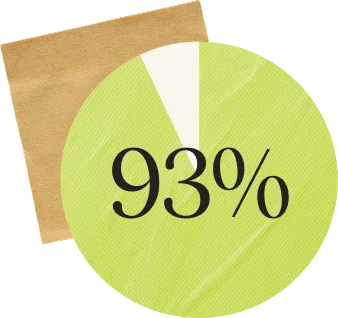
There’s a clear upside to getting dragged closer to the numbers: 93% of owners say they came away with either a healthier business or a stronger grip on the money. For most, the change showed up in the business itself—67% say its financial health improved, including 38% who say it improved significantly.
For another 26%, the results didn’t change much, but something else shifted: they felt more in control. Paying closer attention doesn’t necessarily put more money in the bank overnight. But knowing where you stand can help you sleep a little easier.
The bottom line
For most owners, there comes a point when the business starts asking more of the financial setup behind it. Sometimes that’s a cash squeeze. Sometimes, inconveniently, it’s growth. Sometimes the problems are already waiting when the new owner gets the keys. Whatever gets them there, owners who paid closer attention overwhelmingly report coming away with a healthier business, more control, or both.

Part four
AI time savings are great
If running a business is the American dream, that dream could use fewer emails, reports, customer questions, and general administration. Which is probably why small business owners are handing a lot of that work to AI. These days, 74% of owners are using an AI tool to some degree.
Among those owners, 95% have seen at least one solid benefit (1 in 3 got more work done in the same amount of time! Huge win!). But they’re still drawing lines around what they’ll hand over—and money is one part of the business where they still want the final say.
We trust AI to market, but not to watch the money
Turns out nearly half of business owners are handing off marketing, advertising, and reporting to their new artificial best friend. AI is naturally good at chewing through numbers, and there’s a slew of marketing integrations that make getting started easy.
What doesn’t make the top five AI tasks? Financial management and cash flow. When it comes to the money, owners are less likely to hand over the reins.
That said, it’s also generational. 30% of Gen Z owners use AI for cash flow management, versus just 12% of baby boomers. Who’s running the business plays a big part in how AI is used, and a tech-savvy owner may know how to reduce risk.
Share of owners in each generation who use AI for cash flow management: Gen Z 30%, Millennials 26%, Gen X 20%, Boomers 12%.
| Response | Percent |
|---|---|
| Gen Z | 30% |
| Millennials | 26% |
| Gen X | 20% |
| Boomers | 12% |
Where owners are using AI
| Marketing, advertising or customer targeting | 42% |
|---|---|
| Data analysis, reporting or business intelligence | 41% |
| Operations, workflow automation or process efficiency | 34% |
| Customer service / chatbots / virtual assistants | 31% |
| Product development, research or innovation | 25% |
| Assisting in financial management | 24% |
| Managing cash flow | 23% |
|---|---|
| Automating sales processes | 22% |
| Recruiting, HR or employee training | 20% |
| Fraud and data-breach protection | 19% |
| Equipment maintenance and repair | 17% |
| Other | 1% |
When AI touches the money, owners want an override button
What would make an owner trust AI with their money? A human in the loop to review, approve, or override the decision. It’s clear plenty of owners have been burned by poor AI solutions, too: they want proof that AI will save them time, not create more work and expense.
That makes sense, given that their concerns are privacy risks, errors that go unnoticed, and losing human control or judgement. It’s up to AI solution builders to prove the magic is worth the trouble.
What builds trust for owners when AI touches the money
39%
A human in the loop to review, approve or override decisions
38%
Clear evidence that it saves money or time
35%
Easy integration with existing tools and processes
What owners are concerned about when it comes to AI
34%
Data privacy or security risks
30%
Errors that may go unnoticed until they become big problems
30%
Losing human control or judgment
The robot would like a word in its office
AI may not have feelings, but that hasn’t stopped owners from asking it for help with the surprisingly emotional parts of running a business.
Whether it’s sharing bad news with an employee, managing a finicky client, or figuring out how to be firm (but kind!) without setting a relationship on fire, AI is getting pulled in to support. Twenty-seven percent of owners say they’ve used it for the emotional labor of management, and 22% as a kind of business mentor or coach.
The less-traditional uses also skew dramatically younger: 88% of Gen Z owners and 85% of millennials have used AI for at least one of these kinds of jobs, compared with 38% of boomers.
74%
of owners have used AI for not-so-obvious tasks
The less-obvious jobs owners are giving AI
| Use | Percent |
|---|---|
| Troubleshooting technical issues or internal processes | 35% |
| Competitive intelligence | 31% |
| Emotional labor of management | 27% |
| Hyper-local marketing translation | 25% |
AI can solve problems—but it can also create new ones
The good news: nearly all the businesses (95%) using AI report at least one benefit. Businesses are getting more work done in the same amount of time, reducing operational costs, and improving the quality of what they’re producing.
That said, more than 2 in 3 businesses also saw a drawback. 24% cite worse customer interactions, 22% over-reliance on AI or reduced human judgment, and 20% say AI has actually added administrative burden. Unfortunately, the labor-saving machine also has a knack for creating more labor for some owners.
95%
report at least one benefit to using AI
69%
report at least one drawback to using AI
“I remember when the internet started. If you had a website, you were so forward-thinking. By 1996, a website was table stakes. Everyone had one.
AI is going the same way. Everyone’s going to have it. It replaces a lot of the foundational work—but there’s always a human element above it. The great businesses will be the ones that lean into human expression, storytelling, empathy, and proximity.
It’s not replacing our people. It’s freeing them up to do the more human stuff.”
-Mike Michalowicz, author of Profit First
The bottom line
AI is already giving owners something valuable: a little more capacity in an all-consuming job. Around the money, though, the rules get stricter. Owners want proof, visibility, and a hand on the override. If AI can take more of the rote work off the pile, owners get more room for the decisions, relationships, and judgment that still need them.
Making money make sense
Subscribe to Relay's small business finance newsletter that demystifies and de-jargons money matters.

Part five
Better-organized money makes a stronger business
A better financial setup can’t stop a slow month from happening. It can’t make a customer pay faster or convince an unexpected bill to reconsider its timing. What it can do is make the money easier to read: what’s available, what’s already spoken for, and how much room the business has before something has to give.
Among established Relay customers, businesses that keep money across more funded accounts spend less time running near empty. And when incoming cash falls sharply, businesses with more funded accounts tend to have more room left at the bottom.

Businesses with money in more accounts spend less time running short
A single balance has a way of making money meant for payroll, taxes, rent, and a rainy day fund look like one big pile of available cash. Separating money by purpose makes those boundaries easier to maintain.
Among established Relay customers, more funded accounts go hand-in-hand with fewer days running near empty. Businesses with one funded account spend around 75 days of the year with less than a week of expenses covered. At five or more accounts, that drops to 20 days. Across the board, better visibility correlated with a longer runway–from the smallest businesses to the largest.
Opening another account doesn’t create more money. But when every account has a job, it becomes a lot easier to see which dollars are available—and which ones are already spoken for.
More funded accounts, fewer days running near empty
Days per year with less than one week of expenses covered
1 funded account
75
days
2 funded accounts
57
days
3-4 funded accounts
38
days
5+ funded accounts
20
days

Great setup, but who’s moving the money?
Best case scenario? A business owner has multiple accounts and money automatically transfers to where it needs to be. But only 29% of business owners automate transfers between their accounts, which means a lot of that sorting is still happening by hand—a layer of administration that could get cut.
“The most expected bill is the unexpected one. We don’t know when it’s going to happen, but it’s going to happen. So we set up a method to preserve money for the unexpected.
When something does happen, it’s still a concern. But at least the money is there to address it. Being ready financially for the unexpected brings more discipline and pragmatic behavior, instead of reactionary behavior.”
-Mike Michalowicz, author of Profit First
When a bad month hits, businesses with 5+ accounts have nearly 3x the runway
A stronger cushion doesn’t change rough sales, delayed invoices, or sudden expenses. But among Relay customers, those with more funded accounts tend to have more cash left when incoming money falls sharply.
Customers using one funded account bottom out with about 3.9 days of expenses covered. For customers using five or more accounts, the low point is 11.5 days.
In the grand scheme, eleven days is still tight. But it’s a lot more time than four to collect a payment, rethink spending, or shift the team before a $0 balance takes those decisions away.
Typical days of runway remaining after a sharp drop in incoming cash
Typical low point in days of expenses covered after a sharp drop in incoming cash: 3.9 days with one funded account, 11.5 days with five or more.
| Group | Value |
|---|---|
| 1 funded account | 3.9 |
| 5+ funded accounts | 11.5 |
The bottom line
Small businesses can’t organize their way out of volatility. Customers will still pay late. Sales will still dip. Surprise bills remain deeply committed to the surprise part. A stronger financial setup changes the position the business is in when those things happen. More visibility, clearer boundaries around the money, and a little more cushion can buy time before a hard decision becomes an automatic one. It can leave more choices on the table—and keep the next one where owners wanted it in the first place: in their own hands.

Before the next cash flow surprise
The findings in this report point to practical moves that can make money easier to see, easier to protect, and less likely to disappear at the wrong time.
Here’s where small businesses should focus their financial energy.
Bucket money by the job it’s supposed to do
Taxes, payroll, operating expenses, reserves—if the money already has a job, give it a place to live.
One big balance makes every dollar look equally available. Separate accounts make the boundaries visible before the money gets spent.
Move the money before there’s a chance to forget
Knowing what should be set aside is one thing. Actually moving it every week is another.
Build a regular rhythm for moving money into taxes, payroll, reserves, or other priorities as cash comes in. Automate the repeatable parts wherever possible. The less the system depends on someone remembering, the more likely the money is to still be there when it’s needed.
Keep a cushion ready for the hard months
Cash flow surprises aren’t a “maybe”—they’re a definite. And a reserve is there to buy a business time.
When incoming cash falls, even a few extra days of expenses covered can mean more room to collect an invoice, adjust spending, or decide what gets protected. Keep that cushion separate from everyday operating money, and add to it while the business has room to do so.
Build the muscle before the emergency
Like learning the Heimlich maneuver before you need to use it, business owners should lean into financial expertise across the board before their business is in trouble. Owners that create their own turning point–and are intensely diligent in their practices– may never have to be a part of the 1 in 5 that thought their business would close if the money didn’t turn around.
Use AI to create time for money management
While most business owners see themselves as an expert when it comes to managing their finances, most businesses don’t have all the financial best practices in action. By using AI to take care of the busywork, small business owners can create time to invest in those best practices-and their business’ longevity.
Keep owning the decisions
Business ownership starts with a pretty simple promise: more say over what comes next. The owners Relay surveyed want the business to make money, absolutely. But they also want control over their time, pride in their work, strong relationships, room to grow, and the ability to make a different call when the situation demands it. That’s what the American Dream looks like here.
Of course, things will go wrong. Customers pay late. Costs jump. Growth brings a bigger payroll and more money that’s already spoken for. No single financial setup will ever make a small business predictable. But the best financial practices make sure a surprise isn’t the same thing as a sacrifice. They buy time to think, adjust, and decide what gets protected.
That’s a pretty practical version of financial freedom: knowing what the money needs to do, having some cushion when the month goes sideways, and still having choices left afterward. The employee can stay. The investment can go ahead. The bad-fit client can remain somebody else’s problem. Maybe the owner even gets the afternoon back.
Owning a business should mean owning the decisions. Great finances bring that dream to life.

Methodology
The survey was conducted in July 2026 by Research+Knowledge=Insight, an independent research company, in partnership with Relay. We surveyed 1,031 small and medium business owners across the US, from a wide range of sectors. All companies participating reported revenues of up to $5 million /year, including 23% with less than $240,000. All companies reported having at least 2 employees or contractors. The margin of error is overall, plus or minus 3.0 percentage points, 19 times out of 20.
Alongside the survey, this report also draws on anonymized, aggregated data from 29,503 established U.S. small businesses that opened a Relay account before February 2025 and used it actively through July 2026. Daily balances and transactions were tracked from August 2025 through July 2026. “Funded accounts” are deposit accounts holding a balance. “Expenses covered” is Relay balances divided by average daily outflows through Relay over the prior 30 days, excluding transfers between a business’s own accounts. A “sharp drop in incoming cash” is a month 20% or more below the business’s own six-month median. Figures are medians; no group smaller than 100 businesses is reported. Relay sees only money held and moved through Relay, its customers are not a representative sample of U.S. small businesses, and findings are observed patterns, not causal effects.