

A receipt scanner app turns paper receipts into searchable digital records, so you can keep a clean copy for your bookkeeper, your accountant, and yourself without hanging on to the paper. The best options in 2026 also work as receipt tracker apps: they read each receipt automatically, sort it, and sync it to your accounting software.
That automation matters more than it sounds. According to Capture Expense's 2025 expense trends report, 75% of employees spend more than 15 minutes filing each expense report—over 12 hours a year on manual expense work. A receipt scanner app takes most of that off your plate.
You can also use receipt scanning apps to manage employee expenses—they make it easier for your team to upload meal, travel, and other business receipts, so you spend less time chasing receipts and more time running your business.
Here's how the best receipt scanner apps for small businesses compare in 2026:
Receipt scanner app | Cost | Best for |
|---|---|---|
No monthly maintenance fees; built into business banking | Businesses and advisors who want receipts managed inside their banking platform, where their team spends | |
Zoho Expense | Free plan (20 auto-scans/user per month); paid from $4/user per month | Owners who already use other Zoho apps |
QuickBooks Online | No free plan; from $38/month (Simple Start) | Owners who want receipts inside the tool they already use for accounting |
Expensify | Free up to 25 SmartScans/month; $5/member per month for unlimited | People who want receipt scanning as the main feature |
Wave | No free receipt scanning; $8/month add-on or included in the $19/month Pro plan | Owners who want invoicing and accounting alongside receipts |
Neat | No free plan; from about $200/year | Those who want an all-in-one document and receipt platform |
What is a receipt scanner app?
A receipt scanner app is a mobile (and often desktop) app that uses OCR technology to turn paper receipts into digital records. It's sometimes called a receipt tracker app, because it doesn't just store the image—it reads the merchant, date, and amount and files them for you.
OCR stands for "optical character recognition." The technology takes a picture of the text and makes it readable to machines, so you can search through a receipt's text as if it were typed into a document.
Digital receipts also hold up at tax time. The IRS accepts scanned or photographed receipts as valid records under Revenue Procedure 97-22, as long as the image is complete and legible, and most businesses need to keep supporting records for at least three years. A receipt scanner app keeps that trail without the shoebox.
Receipt scanner apps are increasingly common among small business owners. Freelancers, entrepreneurs, and everyone in between use them to stay on top of expenses and simplify bookkeeping.
What's the best free receipt scanner app?
If price is your main concern, Zoho Expense and Expensify both have genuinely free plans. Zoho Expense's free tier covers up to three users and 20 receipt auto-scans per user each month; Expensify's free plan includes 25 SmartScans per month. Both read the merchant, date, and amount automatically.
The catch is volume. Once you pass those monthly scan limits, you'll need a paid plan. Wave used to be a popular free option, but as of 2026 its receipt scanning sits behind a paywall—an $8/month add-on, or the $19/month Pro plan. For a business that captures a handful of receipts a month, a free tier is plenty; for a team running dozens of purchases, a paid plan or a banking-integrated option like Relay usually works out simpler.
How to use a receipt scanning app
Using a receipt scanning app takes three steps.
1. Get ready
After paying for your items, collect your receipt. Make sure it's correct in terms of the date, payment amount, and merchant name.
Flatten out the receipt and place it on a clean, preferably dark background.
2. Take a picture
Give your receipt scanner app permission to access your camera, then use it to take a photo of your receipt within the app.
If you're in a darker area, turn the flash on so the paper is well lit. Follow the in-app guidelines to get all the necessary parts of the receipt in the picture.
3. File away
Depending on the app, you may be able to sort your receipt, label it, or tag it with a keyword to help you find it later.
Everyone's organizational preferences are different, so file your receipts within your chosen app in a way that's easy for you to remember.
How do receipt scanner apps simplify expense management?
Whether your receipts are digital or physical, it's important to keep them.
By keeping your receipts organized, you'll be better equipped to generate expense reports and see exactly where your money is going.
If you're ever audited or need help from an accountant, valid records of your purchases will speed up the process.
Receipts also matter at tax time. With organized, digitized receipts, it's much easier to track your write-offs, reimbursements, and tax deductions.
There are other reasons to go digital, too. When you digitize your receipts, you're less likely to lose them—leave a binder of receipts behind while traveling and months of spending records can be gone for good. Cloud-based receipt scanner apps add the extra safety of keeping your records even if you delete the app or lose your phone.
What makes a good receipt scanner app?
A few features are worth looking for when choosing a receipt-scanning app.
1. Ease of use
The best receipt scanner apps are simple to use. Ease of use means different things to different people, so try an app first before uploading all of your past receipts at once.
The best apps combine function with a clean design. If you can't tell what the buttons or features do, it may not be the right app for you.
2. Price
Prices vary, and a free plan often locks the most useful features behind a paywall—Wave, for example, now charges for receipt scanning. Double-check that an app includes the features you need at the price you want.
3. Accounting sync and cloud storage
Features like cloud storage, custom labels, categorization, and integration with accounting software vary by app. If you keep your books in QuickBooks Online or Xero, confirm the app syncs to it before you commit—that connection is what saves the most time.
4. Scanning capabilities
The best apps scan receipts quickly and accurately. If an app constantly makes mistakes or takes several minutes to upload a single receipt, it's probably not the right fit.
Do receipt scanner apps sync with accounting software?
Yes—most receipt scanner apps sync with the major accounting tools, and that sync is what saves the real time. Zoho Expense, QuickBooks Online, Expensify, and Wave all connect to accounting software so a scanned receipt becomes a categorized transaction without re-keying. QuickBooks captures receipts inside the same tool you already use for your books.
Relay syncs categorized expenses to QuickBooks Online and Xero, so receipts captured on a business card flow straight into your books. QuickBooks Online and Xero are the two most widely supported integrations, so if accounting sync matters to you, check which one each app connects to before you decide.
Top receipt scanner apps for small businesses in 2026
Ready to choose? These apps are compared on usability, price, features, and scanning capability. Read on to find the best fit for your needs and budget.
1. Relay
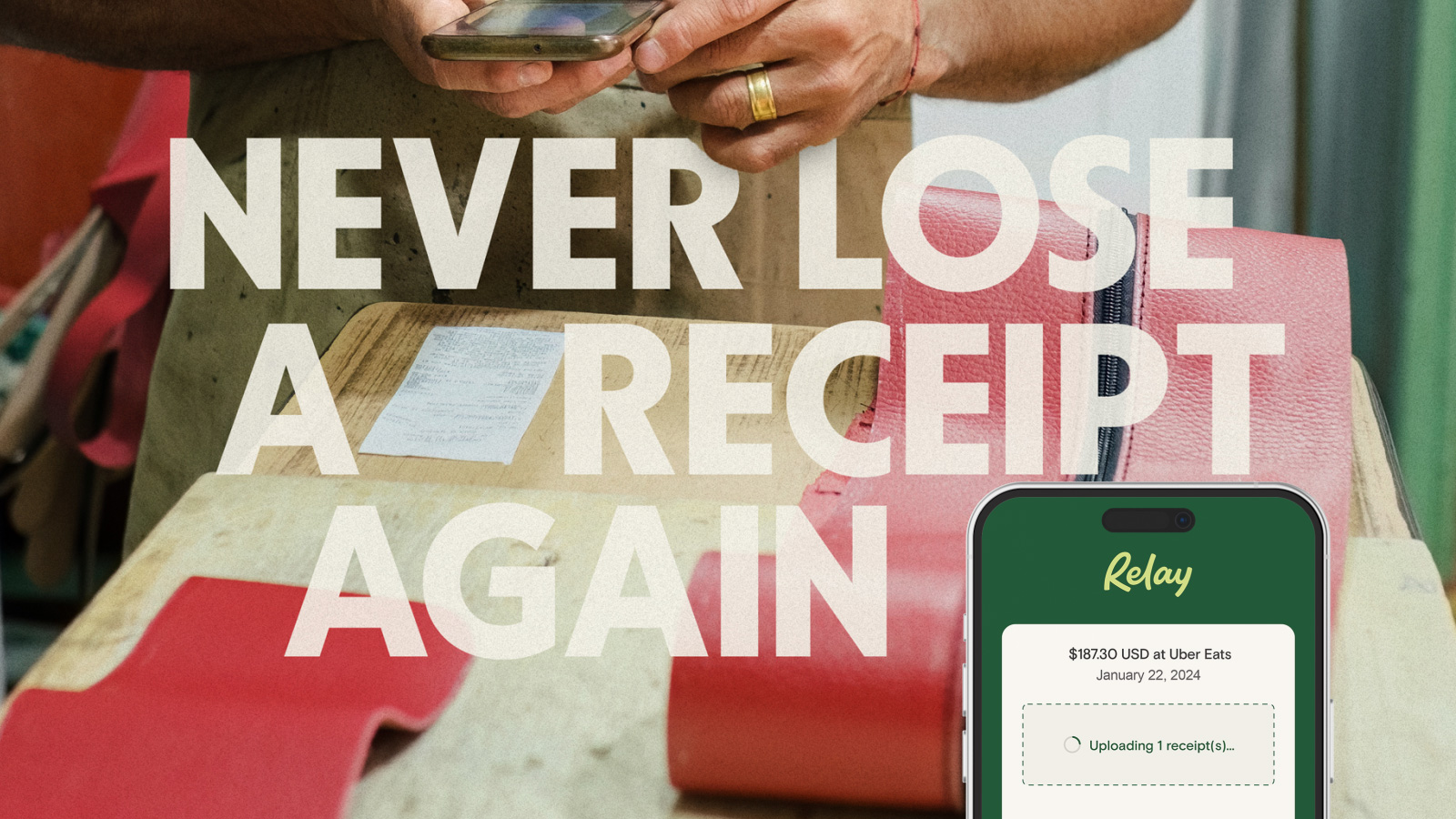
Here at Relay, we're building the all-in-one financial command center for small businesses. That means integrated receipt management right where you already bank.
Relay centralizes receipt collection and keeps you audit-ready. Snap a photo of a paper receipt or forward a digital one by email, and it's stored and searchable in seconds. Set a receipt policy on any card and Relay sends your team an automatic text reminder the moment a receipt is missing, so you stop chasing them down. Receipt capture works on every purchase made with a Relay Visa® Debit Card3, and Relay's AI can auto-categorize recurring expenses and sync them to QuickBooks Online or Xero.
Cost: No monthly maintenance fees; included with a Relay account
Pros:
Built for teams—automatic text reminders when a receipt is missing
Set custom receipt policies on any card
Fully integrated inside your banking platform, no third-party app needed
Snap or email-forward digital and paper receipts, stored and searchable in seconds
AI auto-categorization with sync to QuickBooks Online and Xero
Cons:
Not a fit if you'd rather keep receipts separate from your banking
Overall: Relay is a strong choice for businesses that want to manage receipts, expenses, team spending, and banking in one place.
Learn more about receipt management in Relay.
3The Relay Visa® Debit Card is issued by Thread Bank, Member FDIC, pursuant to a license from Visa U.S.A. Inc. and may be used anywhere Visa debit cards are accepted.
2. Zoho Expense
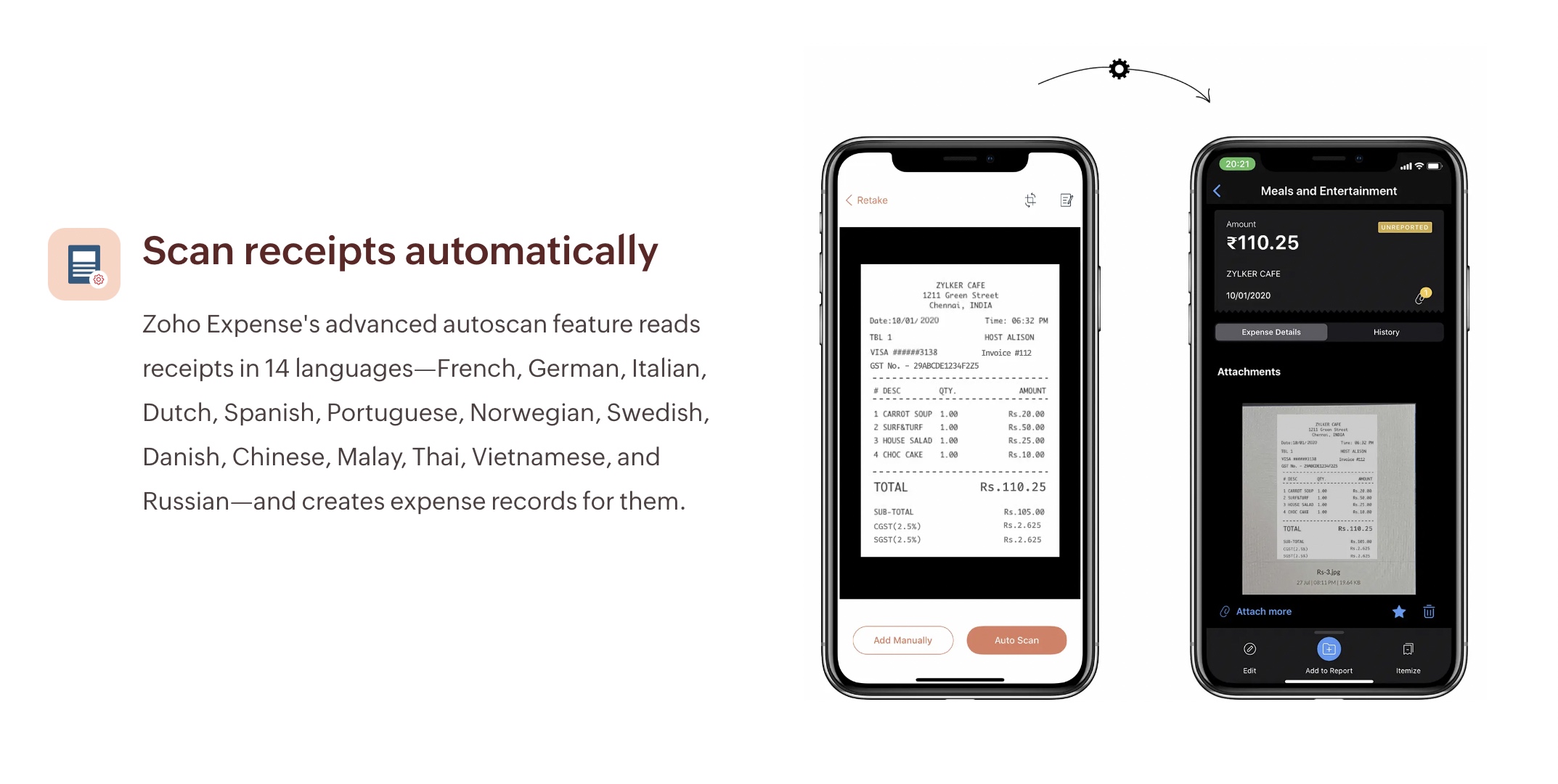
Zoho Expense tracks mileage, organizes expenses, and captures receipts, with plans that scale by business size. It supports more than a dozen languages and many currencies beyond USD.
To use Zoho Expense, take a picture of your receipt in the app. Zoho uses OCR to scan the receipt and assign it to a related expense.
Cost: Free plan (up to 3 users, 20 auto-scans per user per month); paid plans from $4/user per month
Pros:
Automatic receipt scanning, now included on the free and Standard plans
Accounting integration (Zoho Books, QuickBooks Online, and Xero)
Cloud storage support
Email receipt forwarding
Cons:
Limit of three users on the free plan
5GB receipt storage limit on the free plan
Overall: Zoho Expense is a solid choice for businesses of all sizes. The free plan is limited on storage, but it's plenty for most freelancers and small business owners.
3. QuickBooks Online
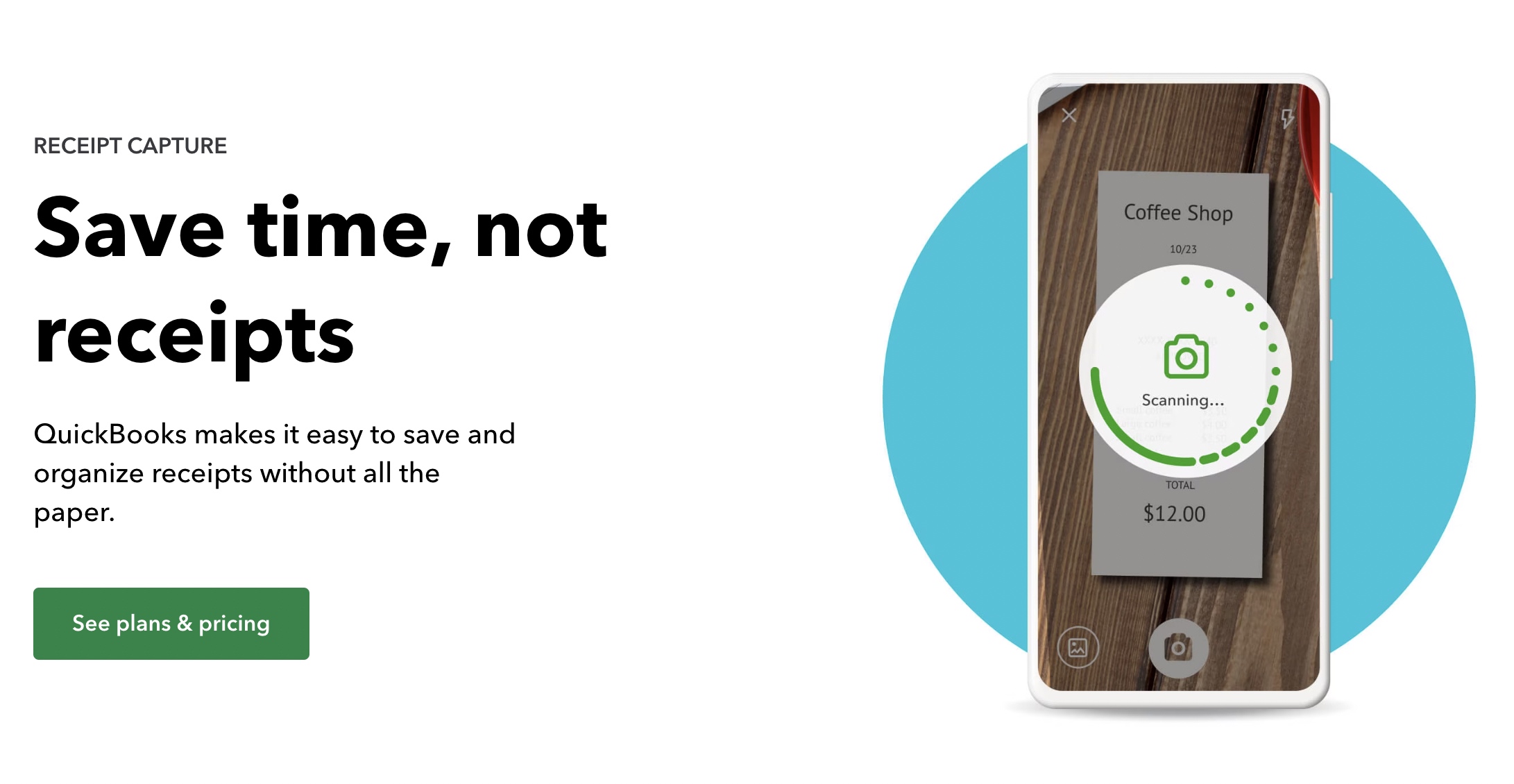
QuickBooks Online has built-in receipt capture. Snap a receipt, upload it, or email it in, and QuickBooks matches it to a transaction automatically.
To use it, download the mobile app. You can scan receipts at home or on the go and attach them to specific transactions later.
Cost: No free plan; from $38/month (Simple Start). Intuit renamed its old Self-Employed plan to Solopreneur.
Pros:
Snap, upload, or email receipts
Automatic expense categorization for tax time
Detail matching to existing transactions
Cons:
No free plan
Best value only if you also use QuickBooks for accounting
Overall: QuickBooks Online is a great option for those who want more than receipt scanning in one app, or who already use QuickBooks. If all you need is a receipt scanner, a simpler app may be a better fit.
4. Expensify
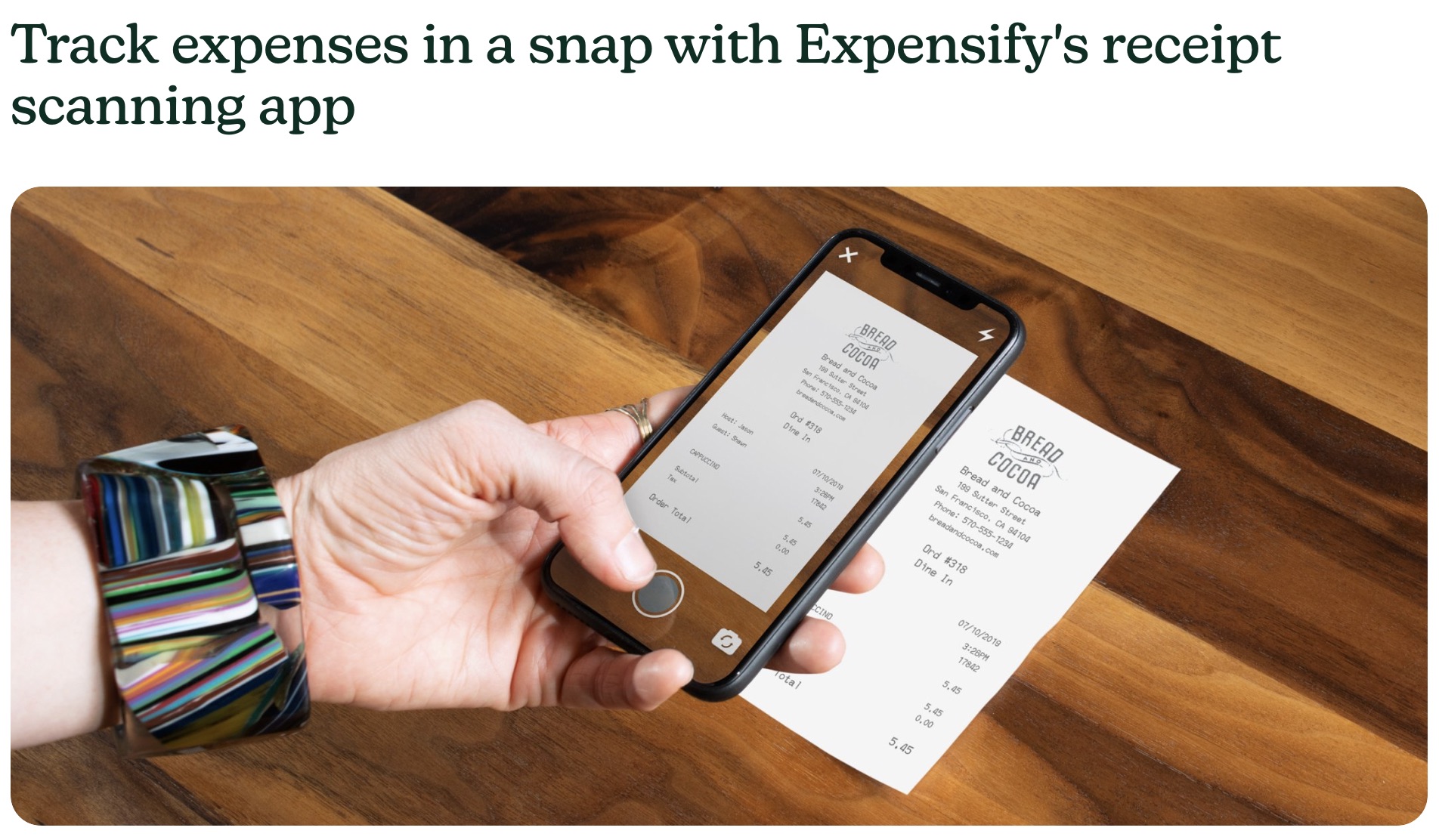
Expensify uses a SmartScan feature to make scanning receipts quick and simple, and it works with 150 currencies. It can also generate an expense report at the end of a trip to send to your accountant or finance manager.
SmartScan is easy to use. Open the app on the go, snap a photo of your receipt, and Expensify identifies the merchant, date, and amount on the spot.
Cost: Free up to 25 SmartScans/month; $5/member per month (Collect plan) for unlimited scans
Pros:
Smart receipt scanning
Analytics and filters
Cloud-based storage and app integrations
Cons:
The free plan is capped at 25 scans per month
Overall: Expensify is limited on the free plan, but its per-member pricing and many integrations make it attractive for teams that scan a lot of receipts.
5. Wave
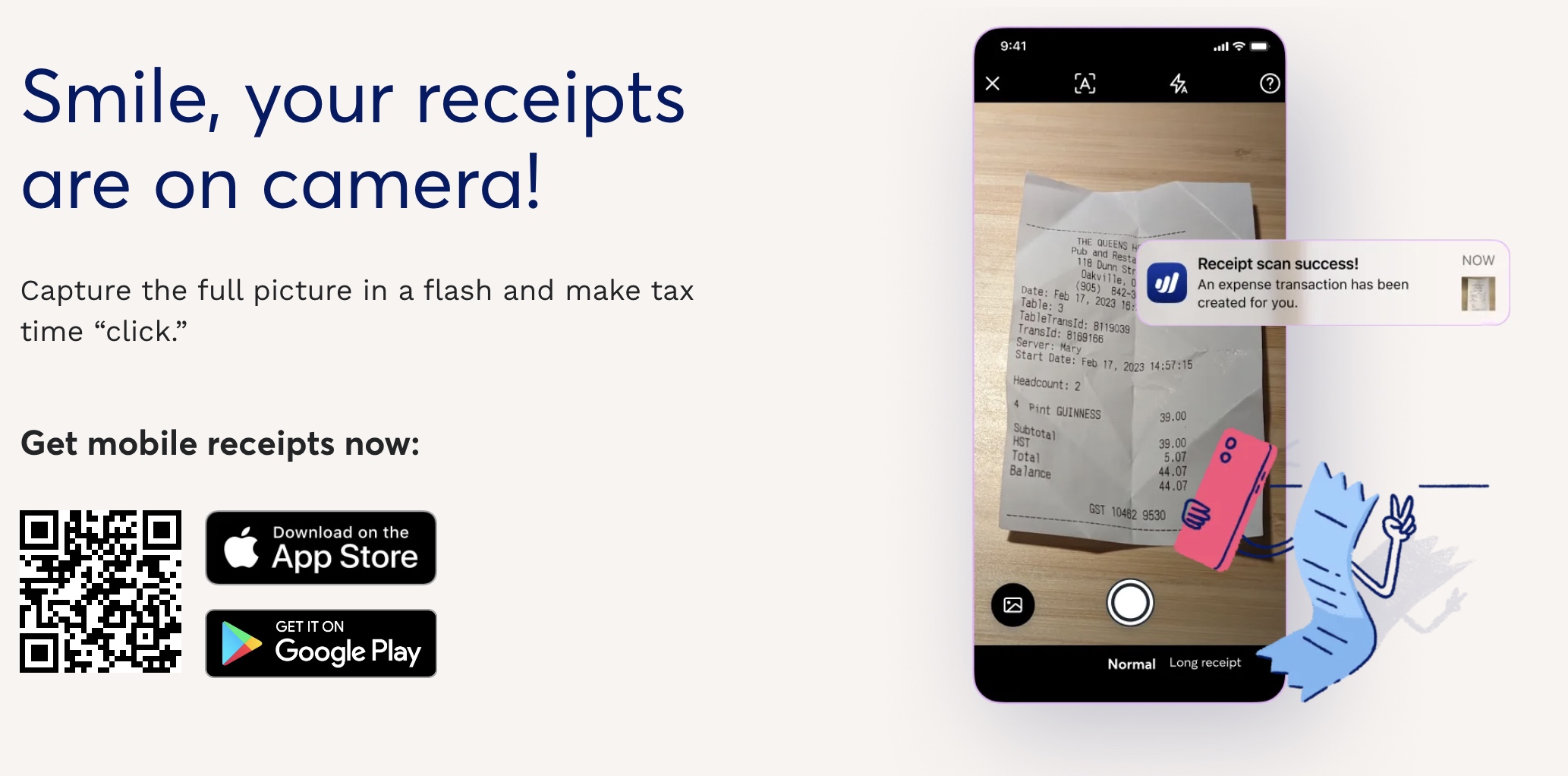
Wave pairs receipt scanning with invoicing and accounting, and its Receipts tool is fast and simple. The big change since 2024: Wave moved receipt scanning behind a paywall—it's no longer part of the free Starter plan. It supports mobile scanning, desktop uploads, and emailed receipts.
In the app, tap the Receipts tab and take a picture of your receipt. You can capture a standard receipt or a "long receipt," linking multiple images for longer pieces of paper.
Cost: No free receipt scanning; $8/month Receipts add-on, or included in the $19/month Pro plan
Pros:
Unlimited receipt scanning and bulk imports once subscribed
Email receipt forwarding
Both mobile and desktop support
Cons:
Receipt scanning now requires a paid plan or add-on
Overall: Wave is a good fit if you also want invoicing and accounting in one place, but receipt scanning is no longer free.
6. Neat
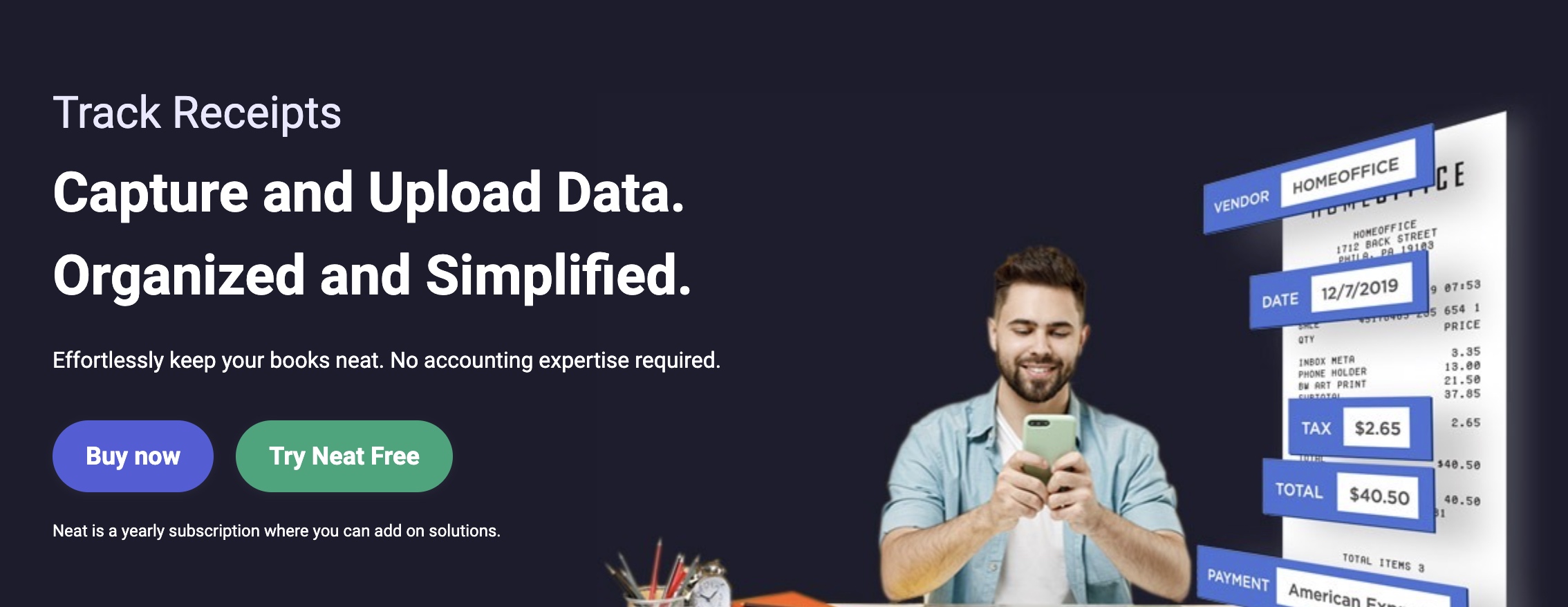
Neat offers a full platform for keeping your finances organized, with receipts as one of many features. You can organize receipts by type, tax category, and more.
In the Neat app, go to the Receipts section. Neat opens your camera and scans your receipt automatically, noting the vendor, date, tax paid, total, and payment method. It also itemizes data line by line.
Cost: No free plan; from about $200/year (free trial available)
Pros:
Integrations with tools like Intuit TurboTax, H&R Block, and QuickBooks
Line-item itemization
Trends and insights
Cons:
Pricier than most receipt scanner options
Discontinued its QuickBooks Desktop integration in 2026 (cloud service continues)
Overall: If you want document software with many features, Neat is a strong choice—though its higher price makes it less tempting for smaller needs.
Stay on top of spending with Relay
Receipt scanning solves one piece of the expense puzzle: capturing the proof. The bigger win comes when receipts, spending, and your accounts live in one place.
Relay brings receipt capture into your business banking. Snap or email-forward receipts, set receipt policies with automatic reminders, and sync categorized expenses to QuickBooks Online and Xero. You also get up to 20 checking accounts (10 for sole proprietors) with no monthly maintenance fees and a savings account to set aside tax reserves. Open a Relay account to keep your receipts and your cash flow in one place.
Frequently asked questions
What is the best free receipt scanner app?
Zoho Expense and Expensify both have genuinely free plans. Zoho Expense's free tier includes 20 receipt auto-scans per user each month for up to three users; Expensify's free plan covers 25 SmartScans per month. Once you pass those limits, you'll need a paid plan.
Are digital receipts acceptable to the IRS?
Yes. The IRS accepts scanned or photographed receipts as valid records under Revenue Procedure 97-22, as long as the image is complete and legible. Most businesses should keep supporting records for at least three years, and longer in some situations.
Do receipt scanner apps work with QuickBooks and Xero?
Most do. Zoho Expense, Expensify, and Wave sync to popular accounting tools, QuickBooks Online captures receipts natively, and Relay syncs categorized expenses to QuickBooks Online and Xero. Check the specific integration you need before choosing.
What's the difference between a receipt scanner and a receipt tracker app?
They're mostly the same thing. "Receipt scanner" emphasizes capturing the image; "receipt tracker" emphasizes organizing and categorizing what's captured. Most modern apps do both—scan the receipt, then read and file the details automatically.
Is there a receipt scanner built into business banking?
Yes. Relay includes receipt capture and expense management inside the account, so you can snap or email-forward receipts, set receipt policies, and sync expenses to QuickBooks Online and Xero without a separate app.
BANKING FOR THE SELF-MADE
Get started in minutes.